
Keeping Your Family Safe from Carbon Monoxide in Your Clarke Square Home
Carbon monoxide is a silent killer that can build up in your Clarke Square home without warning. This colorless, odorless gas comes from incomplete combustion in gas furnaces, water heaters, and other fuel-burning appliances. In Milwaukee’s harsh winters, your heating system works overtime, increasing the risk of CO leaks from cracked heat exchangers or blocked vents. Every year, local families face dangerous situations when snow blocks furnace exhaust pipes or aging equipment fails. Understanding the warning signs and taking preventive action can save lives.
Why Carbon Monoxide is a Winter Risk in Milwaukee
Milwaukee’s climate creates unique challenges for home heating safety. When temperatures drop below zero, your furnace runs continuously for days. This constant operation stresses metal components, especially in older systems common in Clarke Square’s historic homes. The freeze-thaw cycles we experience cause expansion and contraction in heat exchangers, leading to microscopic cracks that grow over time. These cracks allow carbon monoxide to escape into your living space instead of venting outside. We Energies emergency gas and CO response.
Heavy lake-effect snow adds another layer of danger. When snow drifts accumulate around your home’s foundation, they can block the intake and exhaust vents of high-efficiency furnaces. These pipes typically exit through the basement wall near ground level, making them vulnerable to being buried. Even a few inches of snow can create a dangerous backdraft situation where CO flows back into your home instead of escaping outdoors. Outdoor Unit Not Spinning.
Clarke Square’s mix of early 20th-century bungalows and multi-family buildings means many homes have aging heating systems. These units often lack modern safety features like automatic shutoff switches or self-diagnosing electronics. The combination of older equipment, continuous winter operation, and extreme weather creates a perfect storm for potential CO hazards. Why Your Bay View Bungalow Might Benefit from a Ductless Mini Split System.
Signs Your Furnace May Be Leaking Carbon Monoxide
Your furnace often gives warning signs before a complete failure occurs. Learning to recognize these indicators can help you catch problems early. Physical symptoms in your family members provide the most urgent warning. If multiple people experience headaches, dizziness, nausea, or confusion that improves when leaving the house, evacuate immediately and call for help.
Visual indicators around your furnace offer important clues. Look for soot accumulation on or around the unit, which indicates incomplete combustion. Rust or corrosion on the heat exchanger or flue pipe suggests moisture problems that can lead to cracks. A yellow or flickering burner flame instead of a steady blue flame signals combustion issues. Water pooling around the base of your furnace may indicate a cracked heat exchanger allowing moisture to escape.
Listen for unusual sounds from your heating system. A rattling noise when the furnace starts could mean loose metal components or a cracked heat exchanger expanding. Whistling or hissing sounds might indicate gas leaks or pressure problems. If your carbon monoxide detector sounds, never ignore it or assume it’s a false alarm. Even low-level CO exposure over time can cause serious health problems.
Visual Warnings: Soot, Moisture, and Flame Color
During a professional inspection, technicians use combustion analysis tools to measure CO levels in the flue gases. Normal operation produces less than 100 parts per million of CO in the exhaust. Readings above this threshold indicate incomplete combustion requiring immediate attention. The flame color provides a quick visual check – a healthy gas flame burns blue with a slight yellow tip. An entirely yellow or orange flame suggests the need for adjustment or repair. Fast AC Repair Services for Shorewood Residents Who Need Relief from the Humidity.
Soot accumulation tells a story about your furnace’s health. Black, powdery deposits on the burner assembly or heat exchanger indicate the fuel isn’t burning completely. This incomplete combustion wastes energy and produces dangerous CO. In older Milwaukee homes, soot buildup often results from years of neglect or improper maintenance. The presence of moisture around your furnace creates another red flag. Condensation inside the heat exchanger leads to rust, which weakens metal and creates pathways for CO to escape.
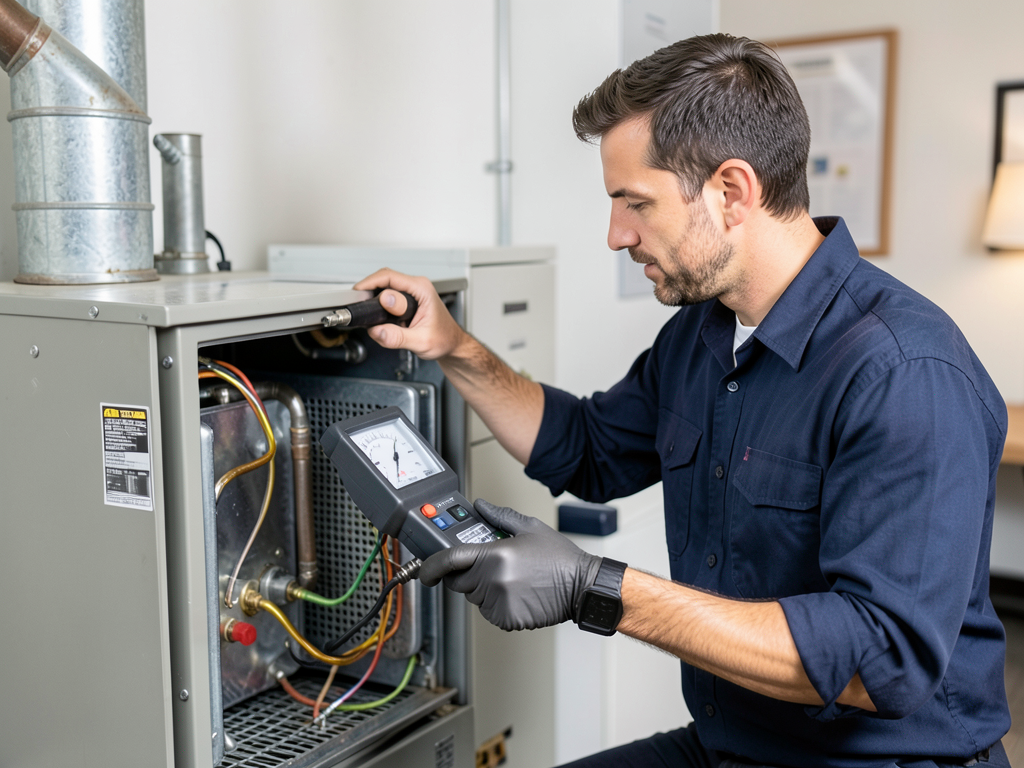
Professional technicians use specialized equipment to detect these issues. A combustion analyzer measures oxygen levels, CO content, and stack temperature to verify proper operation. Thermal imaging cameras can reveal heat patterns that indicate cracks or blockages invisible to the naked eye. These diagnostic tools provide concrete data about your system’s safety rather than guesswork. Who to Call for Honest and Professional Furnace Repair in West Allis.
Physical Symptoms of CO Poisoning You Need to Know
Carbon monoxide poisoning symptoms mimic common illnesses, making diagnosis challenging. Early exposure causes mild headaches, slight nausea, and shortness of breath during mild exertion. As CO levels increase, symptoms intensify to severe headaches, dizziness, vomiting, and mental confusion. High concentrations lead to loss of consciousness, brain damage, and death within minutes.
The key distinguishing factor is that CO symptoms improve when you leave the affected area. If your family feels better after spending time away from home, suspect carbon monoxide. Multiple household members experiencing similar symptoms simultaneously provides another critical clue. Pets often show signs first because they’re smaller and more sensitive to CO. A dog that seems unusually lethargic or a cat that vomits repeatedly might be warning you of a problem.
Time and concentration determine the severity of CO poisoning. At 50 parts per million, healthy adults may not notice symptoms for eight hours. At 400 parts per million, headaches develop within one to two hours. At 1,600 parts per million, symptoms appear within 20 minutes and death can occur within one hour. This rapid progression makes prevention and early detection essential.
Certain groups face higher risks from CO exposure. Infants, elderly individuals, and people with heart or respiratory conditions experience symptoms at lower concentrations. Pregnant women risk harming their developing babies even with mild exposure. If anyone in your household falls into these categories, maintain extra vigilance about CO safety.
Milwaukee Building Codes for CO Detectors and Ventilation
Wisconsin State Statute 101.149 requires carbon monoxide detectors in all residential buildings with fuel-burning appliances, fireplaces, or attached garages. The law mandates one CO alarm on each floor level and within 75 feet of all sleeping areas. Detectors must be installed no more than 12 inches from the ceiling or according to manufacturer specifications. This requirement applies to all Clarke Square homes regardless of age or ownership status. Wisconsin Department of Health Services CO information.
The City of Milwaukee enforces additional requirements through its mechanical code. High-efficiency furnaces with PVC venting pipes must maintain specific clearances from windows, doors, and air intakes. These pipes cannot terminate near ground level where snow accumulation could block them. The mechanical code also requires proper combustion air supply for fuel-burning appliances, preventing negative pressure that could draw CO back into living spaces.
Wisconsin Department of Safety and Professional Services (DSPS) regulations govern HVAC contractor licensing and installation practices. Licensed technicians must follow manufacturer specifications and local code requirements when installing or servicing heating equipment. These standards include proper venting materials, secure mounting of vent pipes, and testing for gas leaks after installation. Homeowners should verify their contractor’s license status before allowing any work on fuel-burning appliances.
Building permits may be required for furnace replacement or major modifications to venting systems. The City of Milwaukee’s Development Center reviews plans to ensure compliance with current codes. This review process protects homeowners by preventing substandard installations that could create safety hazards. While permits add time and cost to projects, they provide essential protection against dangerous shortcuts.
How Our 21-Point Furnace Safety Inspection Protects Your Family
A comprehensive safety inspection goes far beyond basic maintenance. Our 21-point inspection examines every critical component of your heating system to identify potential hazards before they become emergencies. The process begins with checking thermostat operation and electrical connections, then progresses to more detailed examinations of heat exchangers, burners, and venting systems.
Heat exchanger inspection represents the most critical safety check. Technicians use visual examination and specialized testing to detect cracks or corrosion. Small cracks often remain invisible without proper lighting and mirrors, which is why DIY inspections cannot guarantee safety. Combustion analysis testing measures CO levels in the flue gases, providing quantitative data about burner efficiency and safety.
Vent pipe examination ensures proper drafting and clearance from combustible materials. Technicians verify that all joints are properly sealed and that the pipe maintains the correct slope for condensate drainage. For high-efficiency furnaces, they check that intake and exhaust pipes remain clear and properly terminated. Blocked vents represent one of the most common causes of CO problems in Milwaukee homes.
Gas pressure and manifold testing confirm that your furnace receives the correct fuel supply. Too much or too little gas pressure affects combustion efficiency and can produce dangerous CO levels. Technicians also inspect the flame sensor, igniter, and safety controls to verify proper operation. These components work together to shut down the system if problems arise, preventing hazardous conditions.
The inspection includes checking for proper combustion air supply. Modern sealed combustion furnaces draw air directly from outside, eliminating the risk of backdrafting. Older units require adequate air supply from the surrounding space to prevent negative pressure that could pull CO back into your home. Technicians measure air pressure differentials to verify proper operation.
What to Do if Your CO Alarm Sounds in Milwaukee (Emergency Steps)
When your carbon monoxide detector sounds, every second counts. Immediately evacuate all people and pets from the building. Don’t waste time gathering belongings or trying to identify the source. Once outside, move to fresh air and call 911. Milwaukee emergency responders have specialized equipment to detect and measure CO levels, identify the source, and ventilate your home safely. Emergency HVAC Help Anywhere in Milwaukee When Your System Fails at Midnight.
While waiting for emergency responders, do not re-enter the building for any reason. CO can incapacitate you within minutes at high concentrations. If anyone shows symptoms of CO poisoning, tell the 911 dispatcher so paramedics can provide immediate treatment. Oxygen therapy often proves necessary to reverse CO’s effects on the body.
After emergency responders clear the scene, contact your gas utility company. We Energies operates a 24-hour emergency line at 800-261-5325 for gas leak and CO concerns. Their technicians can verify that your gas lines and appliances operate safely. Never attempt to turn gas valves back on yourself after an emergency – let professionals handle this step.
Once the immediate danger passes, schedule professional inspection and repair of your heating system. The problem that caused the CO leak won’t fix itself and will likely worsen over time. Our technicians can identify whether you need simple repairs, component replacement, or complete system replacement. We provide detailed reports explaining our findings and recommendations.
Document the incident for insurance purposes. Take photos of the CO detector that sounded, any visible damage to your heating system, and the emergency response. Contact your homeowner’s insurance agent to discuss coverage for repairs and temporary housing if needed. Some policies cover the cost of alternative accommodations while unsafe conditions are repaired.
Comparing CO Detector Types and Features
| Detector Type | Power Source | Features | Best For |
|---|---|---|---|
| Battery Only | Batteries | Portable, easy install | Rental properties, temporary use |
| Hardwired with Battery Backup | AC with battery | Continuous protection, interconnectable | Owner-occupied homes |
| Digital Display | AC or battery | Shows CO levels, peak memory | High-risk homes, peace of mind |
| Plug-in with Battery Backup | AC with battery | Easy install, digital display option | Bedrooms, hallways |
Selecting the right CO detector requires understanding your specific needs. Battery-only units offer flexibility but require regular battery replacement. Hardwired detectors with battery backup provide continuous protection even during power outages, which often occur during winter storms when heating systems work hardest. Digital display models show real-time CO levels, helping you identify slow leaks before they become dangerous.
Look for UL 2034 certification when purchasing CO detectors. This standard ensures the device meets minimum performance requirements for alarm activation at dangerous CO levels. Some detectors also include smoke detection capabilities, providing dual protection in a single unit. Consider the age of your current detectors – most have a five to seven-year lifespan and lose sensitivity over time.
Proper placement maximizes detector effectiveness. Install units on every level of your home, within 15 feet of sleeping areas, and near but not directly above fuel-burning appliances. Avoid placing detectors in dead-air spaces, near windows or doors where drafts could affect readings, or in humid areas like bathrooms. Follow manufacturer instructions for optimal placement.
Preventing CO Problems Through Regular Maintenance
Annual furnace maintenance represents your best defense against carbon monoxide problems. Professional tune-ups include cleaning burners, adjusting gas pressure, inspecting heat exchangers, and testing safety controls. These services cost far less than emergency repairs and provide peace of mind during the heating season. Many manufacturers require annual maintenance to maintain warranty coverage.
Change your furnace filter regularly – every one to three months depending on your filter type and household conditions. A dirty filter restricts airflow, causing the furnace to work harder and potentially overheat. This additional stress can damage heat exchangers and other components. Set calendar reminders or sign up for automatic filter delivery services to maintain this schedule.
Keep vents and air returns clear of furniture, curtains, and stored items. Blocked airflow forces your system to work inefficiently and can create dangerous pressure imbalances. Check that all supply and return registers remain open and unobstructed. Even closing too many vents can create problems by restricting system airflow.
Monitor your heating system’s performance throughout the winter. If you notice changes in heating patterns, unusual noises, or increased energy bills, don’t wait for a complete failure. These warning signs often indicate developing problems that could lead to CO leaks or system breakdowns. Early intervention prevents costly repairs and safety hazards.
Consider upgrading older heating equipment before it fails completely. Modern high-efficiency furnaces include multiple safety features that older units lack. These systems often pay for themselves through energy savings while providing superior comfort and safety. Our technicians can evaluate your current system and recommend cost-effective upgrades tailored to your home.
Local Resources and Emergency Contacts
Milwaukee residents have access to specific resources for CO safety and emergency response. The Milwaukee Fire Department responds to all CO alarm calls and provides free CO detector installation for qualifying residents. Their non-emergency number is 414-286-3200 for safety information and scheduling non-emergency services.
We Energies offers safety inspections and emergency response for gas-related concerns. Their emergency hotline operates 24/7 at 800-261-5325. They can shut off gas service if necessary and identify the source of leaks or CO problems. Keep this number readily available near your phone or programmed into your cell phone.
The Wisconsin Department of Health Services provides information about CO poisoning symptoms, treatment, and prevention. Their website includes resources for healthcare providers and emergency responders. For medical emergencies, call 911 or go to the nearest emergency room. Froedtert Hospital and Aurora Sinai Medical Center both have hyperbaric oxygen chambers for severe CO poisoning treatment.
Local building inspectors can answer questions about code requirements and permit processes. The City of Milwaukee Development Center handles mechanical permits and inspections. Their office at 809 N. Broadway can provide information about current requirements for furnace installations and modifications.
Neighborhood organizations in Clarke Square may offer additional resources or assistance programs. The Clarke Square Neighborhood Initiative works to improve living conditions and may have information about energy assistance or safety programs. Community centers often host safety workshops and can connect residents with available resources.
Frequently Asked Questions
How often should I replace my carbon monoxide detectors?
Replace battery-powered CO detectors every five to seven years and hardwired units every seven to ten years. Write the installation date on the back of each unit to track replacement timing. Test detectors monthly by pressing the test button and replace batteries annually or when the low-battery chirp sounds.
Can I install carbon monoxide detectors myself?
Yes, most CO detectors are designed for DIY installation with simple mounting hardware. Follow manufacturer instructions for proper placement – typically on each level of your home and near sleeping areas. However, professional installation ensures optimal placement and can include inspection of your heating system for potential CO sources.
What’s the difference between a cracked heat exchanger and a blocked vent?
A cracked heat exchanger allows CO to escape directly into your home’s air supply, while a blocked vent prevents proper exhaust of combustion gases. Both create dangerous conditions but require different repairs. Heat exchanger cracks often require furnace replacement, while blocked vents may be cleared by removing obstructions or snow.
How much does a furnace safety inspection cost?
Professional furnace safety inspections typically range from $75 to $150 depending on the system’s complexity and your location. This cost proves minimal compared to potential emergency repairs or medical expenses from CO exposure. Many companies offer free inspections with paid maintenance services or seasonal specials.
Should I be concerned about my gas stove producing CO?
Gas stoves produce some CO during operation, but proper ventilation usually prevents dangerous buildup. Always use your range hood when cooking and ensure it vents to the outside rather than recirculating air. Never use a gas oven for home heating, as this can produce dangerous CO levels in unventilated spaces.
What should I do if I suspect a CO leak but my detector hasn’t sounded?
Trust your instincts. If multiple household members experience symptoms that improve outside the home, evacuate immediately and call 911. CO detectors may not alarm at very low concentrations that still cause health problems. Emergency responders can measure actual CO levels and identify the source of the problem.
Does my landlord have to provide CO detectors?
Yes, Wisconsin law requires landlords to install and maintain CO detectors in rental properties with fuel-burning appliances or attached garages. Tenants should test detectors upon move-in and report any malfunctions to their landlord immediately. If your landlord refuses to address CO safety concerns, contact local building inspectors for assistance.
How can I tell if my furnace is high-efficiency?
High-efficiency furnaces typically have PVC venting pipes instead of metal, produce condensation during operation, and have an Annual Fuel Utilization Efficiency (AFUE) rating above 90%. These units also have sealed combustion chambers and often include electronic controls. If you’re unsure about your system type, our technicians can identify it during inspection.
Carbon monoxide safety requires vigilance, education, and professional support. By understanding the risks specific to Milwaukee’s climate and Clarke Square’s housing stock, you can take proactive steps to protect your family. Regular maintenance, proper detector placement, and awareness of warning signs create multiple layers of protection against this invisible threat.
Don’t wait for an emergency to discover problems with your heating system. Call (414) 387-8977 today to schedule your comprehensive furnace safety inspection. Our NATE-certified technicians will examine every component of your system, test for CO leaks, and provide detailed recommendations for keeping your home safe all winter long. Pick up the phone and call (414) 387-8977 before the next cold snap hits – your family’s safety is worth it.
{
“@context”: “https://schema.org”,
“@type”: “BlogPosting”,
“headline”: “Keeping Your Family Safe from Carbon Monoxide in Your Clarke Square Home”,
“description”: “Learn how to protect your Clarke Square home from carbon monoxide this winter. Discover Milwaukee-specific safety tips, CO detector laws, and when to call (414) 387-8977.”,
“wordCount”: 3183,
“datePublished”: “2026-03-24T16:25:00.000Z”,
“dateModified”: “2026-03-24T16:25:00.000Z”,
“inLanguage”: “en-US”,
“mainEntityOfPage”: {
“@type”: “WebPage”,
“@id”: “https://firstchoicehvacmilwaukee.com”
},
“publisher”: {
“@type”: “LocalBusiness”,
“name”: “First Choice HVAC Milwaukee”,
“url”: “https://firstchoicehvacmilwaukee.com”
},
“author”: {
“@type”: “Organization”,
“name”: “First Choice HVAC Milwaukee”,
“url”: “https://firstchoicehvacmilwaukee.com”
},
“image”: {
“@type”: “ImageObject”,
“url”: “https://firstchoicehvacmilwaukee.com/wp-content/uploads/2026/03/keeping-your-family-safe-from-carbon-monoxide-in-y-1.png”
}
}
{
“@context”: “https://schema.org”,
“@type”: “HVACBusiness”,
“name”: “First Choice HVAC Milwaukee”,
“url”: “https://firstchoicehvacmilwaukee.com”,
“address”: {
“@type”: “PostalAddress”,
“addressLocality”: “Milwaukee”
},
“areaServed”: {
“@type”: “City”,
“name”: “Milwaukee”
}
}
{
“@context”: “https://schema.org”,
“@type”: “FAQPage”,
“mainEntity”: [
{
“@type”: “Question”,
“name”: “How often should I replace my carbon monoxide detectors?”,
“acceptedAnswer”: {
“@type”: “Answer”,
“text”: “Replace battery-powered CO detectors every five to seven years and hardwired units every seven to ten years. Write the installation date on the back of each unit to track replacement timing. Test detectors monthly by pressing the test button and replace batteries annually or when the low-battery chirp sounds.”
}
},
{
“@type”: “Question”,
“name”: “Can I install carbon monoxide detectors myself?”,
“acceptedAnswer”: {
“@type”: “Answer”,
“text”: “Yes, most CO detectors are designed for DIY installation with simple mounting hardware. Follow manufacturer instructions for proper placement – typically on each level of your home and near sleeping areas. However, professional installation ensures optimal placement and can include inspection of your heating system for potential CO sources.”
}
},
{
“@type”: “Question”,
“name”: “What’s the difference between a cracked heat exchanger and a blocked vent?”,
“acceptedAnswer”: {
“@type”: “Answer”,
“text”: “A cracked heat exchanger allows CO to escape directly into your home’s air supply, while a blocked vent prevents proper exhaust of combustion gases. Both create dangerous conditions but require different repairs. Heat exchanger cracks often require furnace replacement, while blocked vents may be cleared by removing obstructions or snow.”
}
},
{
“@type”: “Question”,
“name”: “How much does a furnace safety inspection cost?”,
“acceptedAnswer”: {
“@type”: “Answer”,
“text”: “Professional furnace safety inspections typically range from $75 to $150 depending on the system’s complexity and your location. This cost proves minimal compared to potential emergency repairs or medical expenses from CO exposure. Many companies offer free inspections with paid maintenance services or seasonal specials.”
}
},
{
“@type”: “Question”,
“name”: “Should I be concerned about my gas stove producing CO?”,
“acceptedAnswer”: {
“@type”: “Answer”,
“text”: “Gas stoves produce some CO during operation, but proper ventilation usually prevents dangerous buildup. Always use your range hood when cooking and ensure it vents to the outside rather than recirculating air. Never use a gas oven for home heating, as this can produce dangerous CO levels in unventilated spaces.”
}
},
{
“@type”: “Question”,
“name”: “What should I do if I suspect a CO leak but my detector hasn’t sounded?”,
“acceptedAnswer”: {
“@type”: “Answer”,
“text”: “Trust your instincts. If multiple household members experience symptoms that improve outside the home, evacuate immediately and call 911. CO detectors may not alarm at very low concentrations that still cause health problems. Emergency responders can measure actual CO levels and identify the source of the problem.”
}
},
{
“@type”: “Question”,
“name”: “Does my landlord have to provide CO detectors?”,
“acceptedAnswer”: {
“@type”: “Answer”,
“text”: “Yes, Wisconsin law requires landlords to install and maintain CO detectors in rental properties with fuel-burning appliances or attached garages. Tenants should test detectors upon move-in and report any malfunctions to their landlord immediately. If your landlord refuses to address CO safety concerns, contact local building inspectors for assistance.”
}
},
{
“@type”: “Question”,
“name”: “How can I tell if my furnace is high-efficiency?”,
“acceptedAnswer”: {
“@type”: “Answer”,
“text”: “High-efficiency furnaces typically have PVC venting pipes instead of metal, produce condensation during operation, and have an Annual Fuel Utilization Efficiency (AFUE) rating above 90%. These units also have sealed combustion chambers and often include electronic controls. If you’re unsure about your system type, our technicians can identify it during inspection.”
}
}
]
}
{
“@context”: “https://schema.org”,
“@type”: “BreadcrumbList”,
“itemListElement”: [
{
“@type”: “ListItem”,
“position”: 1,
“name”: “Home”,
“item”: “https://firstchoicehvacmilwaukee.com”
},
{
“@type”: “ListItem”,
“position”: 2,
“name”: “Blog”,
“item”: “https://firstchoicehvacmilwaukee.com/blog”
},
{
“@type”: “ListItem”,
“position”: 3,
“name”: “Keeping Your Family Safe from Carbon Monoxide in Your Clarke Square Home”
}
]
}
{
“@context”: “https://schema.org”,
“@type”: “Service”,
“serviceType”: “HVAC”,
“provider”: {
“@type”: “LocalBusiness”,
“name”: “First Choice HVAC Milwaukee”,
“url”: “https://firstchoicehvacmilwaukee.com”
},
“areaServed”: {
“@type”: “City”,
“name”: “Milwaukee”
},
“description”: “Learn how to protect your Clarke Square home from carbon monoxide this winter. Discover Milwaukee-specific safety tips, CO detector laws, and when to call (414) 387-8977.”
}