





Menu

Rooftop Unit Installation in Milwaukee – Minimize Downtime with Expert Commercial RTU Deployment

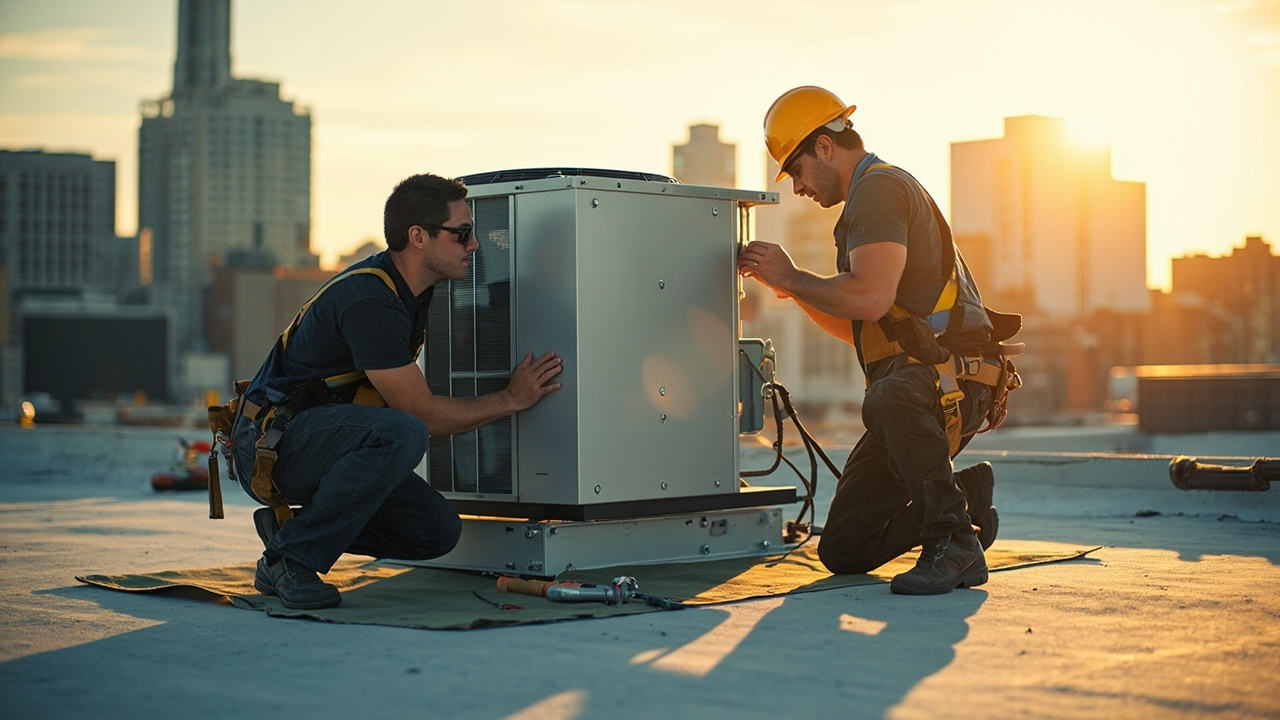
First Choice HVAC Milwaukee delivers fast, code-compliant rooftop package unit installation for commercial facilities across the greater Milwaukee metro, ensuring your business operations continue without disruption while meeting Wisconsin commercial building codes.

Slider Image 1
Slider Image 2
Slider Image 3
Slider Image 4
Slider Image 5
Slider Image 7
Slider Image 8
Slider Image 9
Slider Image 10
Slider Image 11

Milwaukee's Industrial Climate Demands Purpose-Built Commercial Rooftop HVAC Solutions

Milwaukee's freeze-thaw cycles put extreme stress on commercial rooftop HVAC systems. Your RTU installation must withstand temperature swings from subzero January mornings to 90-degree summer afternoons, often within the same week. The Lake Michigan effect creates additional humidity that accelerates corrosion on improperly specified equipment.

Your facility cannot afford extended downtime. Whether you manage a manufacturing plant in the Menomonee Valley, a distribution center near Mitchell International Airport, or a retail complex along the 94 corridor, your commercial rooftop HVAC installation directly impacts productivity, inventory integrity, and tenant satisfaction.

Most commercial RTU install failures in Milwaukee stem from three preventable issues. First, undersized units that cannot handle humidity loads during summer months. Second, inadequate structural reinforcement for roof deck load ratings, which becomes critical when replacing aging units with modern high-efficiency equipment. Third, improper curb adapter selection that creates thermal bridging and condensation problems.

Rooftop package unit installation for commercial facilities requires load calculations that account for actual occupancy patterns, not generic square footage estimates. A warehouse operating three shifts generates different internal heat loads than a retail space open 10 hours daily. Your system sizing must reflect real-world usage.

The city's commercial building stock includes everything from century-old riverfront warehouses to modern tilt-up construction. Each building type presents distinct structural considerations for rooftop AC replacement. Historical properties in the Historic Third Ward require crane access coordination and potential structural upgrades before equipment placement. Newer construction may need curb modifications to accommodate modern unit footprints. Your commercial RTU installation must account for these site-specific factors before the first lift occurs.

Milwaukee's Industrial Climate Demands Purpose-Built Commercial Rooftop HVAC Solutions
Our Commercial Rooftop Unit Installation Process Prioritizes Business Continuity

Our Commercial Rooftop Unit Installation Process Prioritizes Business Continuity

We begin every commercial rooftop HVAC installation with structural load verification. Your roof deck must support not just the static weight of the new RTU, but also dynamic loads during Wisconsin wind events and snow accumulation. We coordinate with structural engineers when existing curbs show inadequate load ratings or when transitioning from older, lighter equipment to modern units with integrated economizers and variable-speed components.

Our rooftop package unit installation includes comprehensive curb assessment. Most commercial buildings in Milwaukee use steel curbs, but age and exposure create rust-through at fastener points. We evaluate existing curbs for dimensional compatibility with new equipment, check pitch for proper condensate drainage, and verify flashing integrity before scheduling the crane. If your curb requires replacement or modification, we coordinate that work to minimize schedule impact.

We schedule commercial RTU install projects during your lowest-occupancy periods. For retail clients, that means overnight or Sunday installations. For manufacturers with continuous operations, we stage equipment and prefabricate connections to reduce roof-open time to 4-6 hours. We maintain temporary conditioning when feasible and coordinate with your facilities team on space priorities.

Electrical and gas connections receive particular attention. Many older Milwaukee commercial buildings have undersized feeders or panels located far from rooftop equipment. We verify voltage, phase, and ampacity requirements against existing infrastructure during the assessment phase. Gas line sizing must account for input BTU requirements and pipe run length to maintain proper pressure at the unit. We pull permits and coordinate inspections with the City of Milwaukee Department of Neighborhood Services to keep your project on schedule.

Our rooftop AC replacement process includes refrigerant recovery and proper disposal per EPA regulations. We document existing system performance before shutdown to establish baseline efficiency metrics for the new installation.

What Happens During Your Commercial RTU Deployment

Rooftop Unit Installation in Milwaukee – Minimize Downtime with Expert Commercial RTU Deployment
01

Site Assessment and Engineering

We perform roof access evaluation, structural load verification, and electrical infrastructure assessment. Our team measures existing curb dimensions, documents current unit specifications, and photographs roof penetrations. We review building plans when available and coordinate with property managers on crane staging areas, delivery logistics, and required access restrictions. This phase identifies potential obstacles before equipment arrives on site.
02

Equipment Removal and Preparation

We disconnect and recover refrigerant from existing units, then coordinate crane service for safe removal. Our crews prepare the curb surface, replace deteriorated flashing, and verify all supply and return ductwork connections. We stage the new RTU adjacent to the installation point and prefabricate electrical whips, gas piping, and condensate drain connections. This preparation reduces actual roof-open exposure time and minimizes weather-related risks during the changeover.
03

Installation and Commissioning

We set the new rooftop package unit, complete all utility connections, and perform leak testing on refrigerant circuits and gas lines. Our technicians verify airflow at each zone, program thermostats and building automation system integration, and run full-load performance tests. We document baseline efficiency readings and provide your facilities team with operation training. City of Milwaukee final inspections occur before we consider the commercial rooftop HVAC installation complete.

Why Milwaukee Businesses Choose First Choice HVAC for Commercial Rooftop Systems

We maintain relationships with crane operators familiar with Milwaukee's downtown access restrictions and Historic District requirements. That familiarity prevents costly delays when working on properties along the Milwaukee River or in Walker's Point, where street closures require advance coordination with the city and adjacent businesses.

Our technicians understand Wisconsin commercial building codes and City of Milwaukee amendments that affect rooftop unit installation. We know which situations require structural engineer stamps, when fire-rated curbs become mandatory, and how to navigate Department of Neighborhood Services inspection protocols. That knowledge keeps your project moving forward without surprise stop-work orders or failed inspections.

We stock common commercial RTU components in our local warehouse. When you need a replacement blower motor, circuit board, or contactor during Wisconsin's extreme weather periods, we have parts available without waiting for regional distributor shipments. That inventory commitment matters when a failed compressor threatens product integrity in your cold storage facility or when a control failure shuts down conditioning in your data center.

First Choice HVAC Milwaukee maintains manufacturer certifications for major commercial equipment brands. Those certifications ensure warranty compliance and give you access to factory technical support when complex diagnostics require engineering consultation. We document all installation parameters and provide you with commissioning reports that validate system performance against design specifications.

We understand the operational constraints facing Milwaukee businesses. Your rooftop AC replacement cannot force a three-day shutdown during peak season. Our project planning accounts for your revenue cycles, inventory schedules, and tenant obligations. We provide realistic timelines and maintain those commitments through detailed preparation and adequate crew deployment.

Our commercial rooftop HVAC installation includes coordination with other trades when necessary. If your project requires electrical upgrades, roof repairs, or building automation system modifications, we manage those interfaces to prevent scheduling conflicts and communication failures that delay completion.

What to Expect from Your Commercial RTU Installation Project

Project Timeline and Scheduling

Most commercial rooftop package unit installations require 2-4 weeks from contract signing to final commissioning. That timeline includes equipment procurement, permit processing, and weather contingency. Simple changeouts with existing curb reuse and adequate electrical infrastructure can complete faster. Projects requiring structural reinforcement, electrical service upgrades, or custom curb fabrication need additional lead time. We provide detailed schedules that identify critical path items and coordinate closely with your facilities team on occupancy requirements. Our crews work overnight or weekends when your operations demand uninterrupted daytime access.

Engineering Assessment Process

Our initial site evaluation takes 1-2 hours and covers roof access, structural adequacy, existing unit condition, and utility infrastructure capacity. We measure supply and return duct sizes, verify electrical panel ampacity and available breaker spaces, and check gas meter capacity and piping size. We document roof membrane condition around the existing curb and photograph all penetrations. You receive a detailed proposal that specifies equipment model numbers, includes load calculations, and identifies any required ancillary work like electrical upgrades or curb replacement. We explain why we specify particular units based on your building's characteristics and operational requirements.

System Performance and Efficiency

Modern commercial RTU installations deliver 15-25 percent energy savings compared to units installed before 2010. Variable-speed blower motors reduce electrical consumption during partial-load conditions, which represents 70-80 percent of annual runtime in Milwaukee's climate. Economizer integration provides free cooling during shoulder seasons when outdoor air temperatures allow. We program your system for optimal efficiency while maintaining occupant comfort and meeting ventilation code requirements. Our commissioning process verifies that all energy-saving features function correctly and that your building automation system communicates properly with the new equipment. You receive baseline performance documentation for future comparison.

Ongoing Support and Maintenance

Your commercial rooftop HVAC installation includes manufacturer warranty coverage and our service commitment. We provide recommended maintenance schedules tailored to your equipment and operating hours. Most commercial RTU systems require quarterly filter changes, annual coil cleaning, and biannual refrigerant charge verification. We offer preventive maintenance agreements that include priority service response, discounted repair rates, and comprehensive system documentation. Our technicians track your equipment history in our service management system, so every service call includes complete knowledge of your installation parameters and previous service work. That continuity prevents redundant diagnostics and ensures faster problem resolution.

Frequently Asked Questions

You Have Questions,
We Have Answers

How much does it cost to install a rooftop unit? +

Commercial rooftop unit installation in Milwaukee ranges significantly based on tonnage, building size, and structural modifications. A 3-ton unit for a small office starts around $8,000-$12,000, while 10-ton systems for larger facilities can exceed $25,000. Costs include the unit itself, curb mounting, ductwork modifications, electrical upgrades, and crane rental for placement. Milwaukee's freeze-thaw cycles require proper curb insulation and weatherproofing, adding to material costs. Replacing older units often triggers code compliance updates, including refrigerant conversions and energy efficiency mandates. Budget for structural assessments if your roof wasn't originally designed for equipment loads.

What does a rooftop unit sit on? +

Rooftop units sit on roof curbs, which are prefabricated or custom-built frames that create a weathertight platform. The curb elevates the unit above the roof membrane, provides structural support, and includes a built-in drainage system. In Milwaukee, curbs require heavy-duty flashing and insulation to handle temperature swings from subzero winters to humid summers. Most commercial installations use galvanized steel or aluminum curbs bolted directly to roof joists or steel beams. The curb also isolates vibration from the building structure. Proper curb installation prevents roof leaks, the leading cause of premature equipment failure in Wisconsin climates.

What is the life expectancy of a rooftop HVAC unit? +

Commercial rooftop HVAC units last 15-20 years with proper maintenance in Milwaukee conditions. Wisconsin's extreme temperature fluctuations, high humidity, and snow load accelerate wear on compressors, coils, and control boards. Units exposed to Lake Michigan weather patterns often experience corrosion issues that shorten lifespan. Facilities that skip seasonal maintenance see failure rates increase after year 12. Key factors include runtime hours, maintenance frequency, and installation quality. Buildings with heavy manufacturing processes or extended operating hours may need replacement closer to 12-15 years. Annual inspections and coil cleaning extend equipment life and maintain energy efficiency.

How much does it cost to replace a 5 ton rooftop unit? +

Replacing a 5-ton commercial rooftop unit in Milwaukee typically costs $12,000-$18,000, including equipment, crane service, curb modifications, and labor. The price varies based on SEER rating, refrigerant type, and control system complexity. Milwaukee installations often require curb reinforcement due to snow load requirements and updated electrical work for current code compliance. Add 20-30 percent if ductwork modifications or roof structural upgrades are needed. Buildings with difficult roof access or downtown locations face higher crane costs. Gas-electric package units cost more than electric-only models. Get quotes that include startup, balancing, and warranty registration.

What is the $5000 AC rule? +

The $5,000 AC rule is an outdated guideline suggesting that if repair costs exceed $5,000 or the unit's age multiplied by repair cost exceeds $5,000, replace instead of repair. This rule doesn't apply well to commercial rooftop units, where single compressor replacements can cost $4,000-$7,000 but extend equipment life by 5-8 years. For Milwaukee businesses, consider total ownership costs, downtime impact, and energy efficiency gains. A 15-year-old unit consuming 40 percent more energy than new models may justify replacement even for a $3,000 repair. Factor in refrigerant phase-outs and parts availability.

How much is an AC unit for a 2000 sq ft house? +

This question targets residential systems, not commercial rooftop units. For a 2,000-square-foot commercial space in Milwaukee, you need 3-5 tons depending on insulation, occupancy, and equipment loads. Commercial rooftop packages for this size range from $8,000-$15,000 installed. Unlike residential splits, commercial units are all-in-one systems mounted on the roof with ductwork running through the building. Milwaukee's climate requires higher heating capacity than southern markets. Commercial installations include crane service, roof penetrations, and curb mounting that residential systems don't require. Consult a commercial HVAC contractor for accurate load calculations.

What are the disadvantages of rooftop units? +

Rooftop units expose critical components to Milwaukee's harsh weather, accelerating corrosion and requiring more frequent maintenance than indoor systems. Snow accumulation blocks airflow and strains compressors. Ice dams cause drainage failures. Roof access for repairs is difficult and dangerous in winter. Units create roof penetration points that can leak if curbs aren't properly flashed. Noise transmission affects upper floors unless vibration isolation is installed. Crane rental is required for replacement, adding $2,000-$4,000 to costs. However, rooftop placement saves valuable indoor space and simplifies ductwork in many commercial buildings, making these trade-offs acceptable for most facilities.

What is the 3 minute rule for AC? +

The 3-minute rule refers to compressor short-cycle protection built into modern HVAC controls. After shutdown, the system waits 3-5 minutes before restarting to allow refrigerant pressures to equalize. Restarting too quickly damages the compressor by forcing it to start against high head pressure. Commercial rooftop units in Milwaukee with digital controls enforce this delay automatically. Older pneumatic or electromechanical systems may lack this protection, leading to premature compressor failure. Facilities experiencing frequent power fluctuations or running generator backup should verify their units have adequate time-delay relays. This protection extends compressor life significantly.

Do AC units make your electric bill go up? +

Yes, commercial rooftop AC units significantly increase electric bills during Milwaukee's humid summers. A 10-ton unit draws 35-50 kilowatts at full load, costing $300-$600 monthly at commercial rates when running continuously. Older units with SEER ratings below 10 consume 40 percent more power than modern 13-15 SEER equipment. Milwaukee's humid climate forces units to run longer for dehumidification, increasing runtime and costs. Dirty coils, refrigerant leaks, and worn compressors spike consumption further. Demand charges punish facilities with poor load management. Variable-speed units and economizers reduce operating costs by 25-35 percent compared to single-stage systems.

How long does it take to replace a roof AC unit? +

Commercial rooftop unit replacement takes 6-12 hours for straightforward installations in Milwaukee. The timeline includes crane setup, old unit removal, curb inspection and modification, new unit placement, electrical connections, refrigerant charging, and startup testing. Complex jobs requiring ductwork changes, structural reinforcement, or extensive electrical upgrades can extend to 2-3 days. Milwaukee installations often uncover roof damage that requires repair before setting the new unit. Schedule replacements during mild weather when business impact is minimal. Most contractors work overnight or weekends to avoid disrupting operations. Permit acquisition adds 1-2 weeks to project timelines in Milwaukee.

How Milwaukee's Lake Effect Climate Impacts Commercial Rooftop Unit Longevity

Milwaukee's proximity to Lake Michigan creates humidity conditions that accelerate corrosion on commercial rooftop HVAC equipment. Summer dew points regularly exceed 70 degrees, promoting condensation on cold refrigerant lines and electrical components. Winter brings lake-effect snow that can accumulate on rooftop units faster than on surrounding roof surfaces, creating drainage problems when rapid thaws occur. Your commercial RTU installation must include proper condensate management, corrosion-resistant fasteners, and adequate clearance for snow shedding. Units installed without accounting for Milwaukee's microclimate patterns show premature coil deterioration, control failures, and structural fatigue. Proper specification and installation techniques extend equipment life from 12-15 years to the full 18-20 year design expectancy.

The City of Milwaukee requires commercial mechanical permits for rooftop unit replacement, and inspections verify proper clearances, gas line sizing, electrical connections, and structural adequacy. We maintain current knowledge of Wisconsin commercial building codes and Milwaukee-specific amendments that affect commercial rooftop HVAC installation. Our established relationships with city inspectors and our track record of code-compliant work mean your project avoids delays from failed inspections or incomplete permit applications. Milwaukee's commercial property owners benefit from working with contractors who understand local requirements and can navigate the permitting process efficiently. That local expertise protects your investment and ensures your installation meets all regulatory requirements.

HVAC Services in The Milwaukee Area

We proudly serve residential and commercial clients throughout the Milwaukee area. Our central location allows us to provide rapid, reliable service to neighborhoods and communities all over the region. Whether you're in the heart of the city or in the surrounding suburbs, our expert technicians are just a call away. View our map below to see our service area and find our main office location.

Address:
First Choice HVAC Milwaukee, 5700 W Capitol Dr,, Milwaukee, WI, 53209

Additional Services We Offer

Our news updates

Latest Articles & News from The Blogs

Solving the Humidity and Heat Problems Caused by Your Laundry Room in West Allis High humidity in your West Allis…

Solving the Humidity and Heat Problems Caused by Your Laundry Room in West Allis

Solving the Humidity and Heat Problems Caused by Your Laundry Room in West Allis High humidity in your West Allis…

How Using Your Wood Burning Fireplace Affects Your HVAC System in Delafield

How Using Your Wood Burning Fireplace Affects Your HVAC System in Delafield When you light your wood burning fireplace in…

The Real Risks of DIY Furnace Cleaning and Why It Might Void Your Warranty in Glendale

Glendale homeowners face unique challenges when it comes to furnace maintenance. The extreme Wisconsin winters put tremendous strain on heating…

Contact Us

Contact First Choice HVAC Milwaukee at (414) 387-8977 for a detailed commercial RTU installation assessment. We provide comprehensive proposals with equipment specifications, project timelines, and transparent pricing. Our team responds within 24 hours to schedule your site evaluation.