




Menu

Storm Damage HVAC Repair in Milwaukee – Emergency Response Teams Dispatched Within the Hour

When severe weather compromises your heating or cooling system, storm damage HVAC repair requires immediate action to prevent secondary damage, protect your property, and restore comfort before the next weather event hits.

Slider Image 1
Slider Image 2
Slider Image 3
Slider Image 4
Slider Image 5
Slider Image 7
Slider Image 8
Slider Image 9
Slider Image 10
Slider Image 11

Milwaukee Storm Systems Hit HVAC Equipment Hard

Milwaukee's position on Lake Michigan creates unpredictable storm patterns that pummel outdoor HVAC units without warning. Severe thunderstorms carry hail that dents condenser coils, winds that tear loose refrigerant lines, and flooding that submerges electrical components. The June through August storm season brings frequent lightning strikes that fry circuit boards and compressors.

Your air conditioning stops working in 90-degree heat. Your furnace goes offline before the next cold front arrives. Water pools around your equipment. Strange grinding noises start after the winds die down. These are not problems that wait for business hours.

Emergency HVAC storm repair becomes critical when you factor in Milwaukee's rapid temperature swings. A damaged AC unit during a heat wave creates health risks for children and elderly residents. Storm damaged AC unit repair cannot wait three days for an appointment. Refrigerant leaks from bent lines pose environmental hazards. Electrical shorts from water intrusion create fire risks.

First Choice HVAC Milwaukee dispatches certified technicians to storm-damaged properties throughout the greater Milwaukee metro within 60 minutes of your call. We respond to Riverwest, Bay View, and Washington Heights neighborhoods when severe weather hits. Our trucks carry replacement contactors, capacitors, and refrigerant to restore your system the same day. We document storm damage for your insurance claim while we work. HVAC storm restoration services require both technical skill and speed, and we deliver both when Milwaukee residents need heating and cooling storm damage repair after nature strikes.

Milwaukee Storm Systems Hit HVAC Equipment Hard
Our Storm Damage Assessment and Repair Protocol

Our Storm Damage Assessment and Repair Protocol

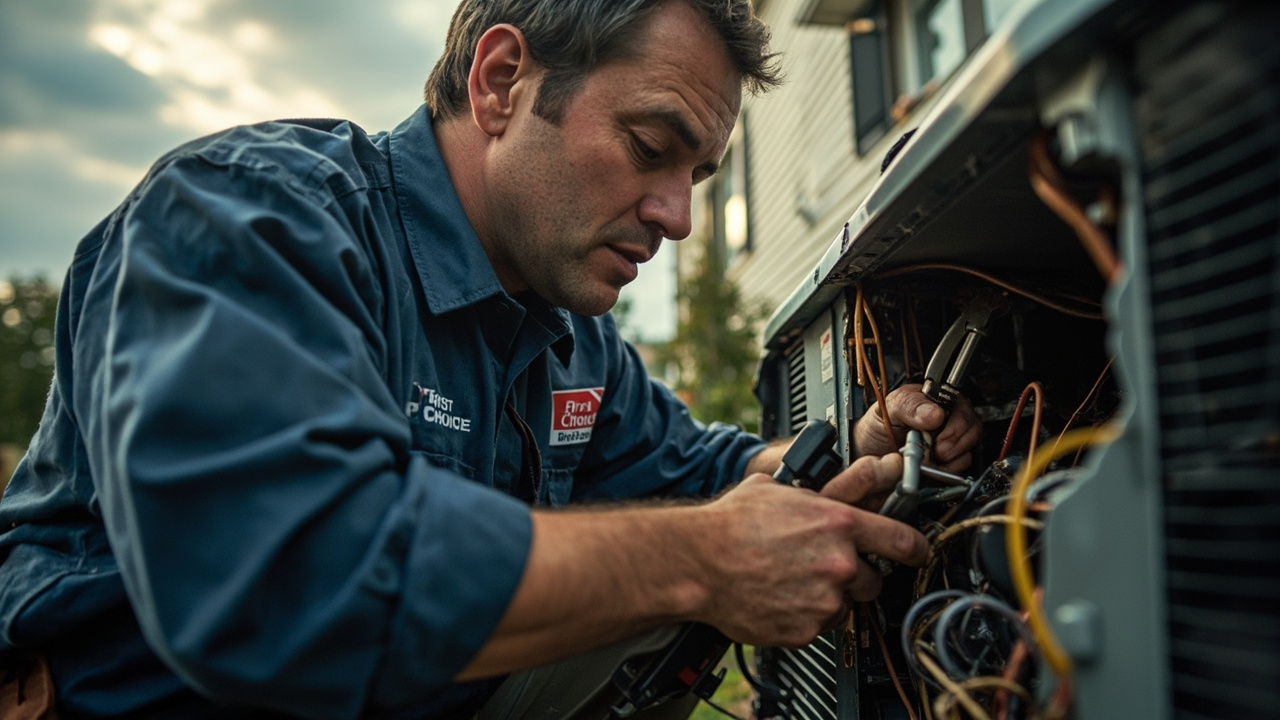
We arrive at your property and immediately assess whether your system poses an electrical hazard or refrigerant leak. Our technicians kill power to damaged equipment before anyone approaches the unit. We photograph all visible damage from multiple angles for insurance documentation before we touch anything.

The diagnostic phase separates cosmetic damage from system-critical failures. Dented cabinet panels look bad but rarely affect performance. Bent condenser fins reduce airflow by 40 percent and cause compressor failure within weeks. We straighten fins on-site with specialized combs. We pressure-test refrigerant lines with nitrogen to locate pinhole leaks from flying debris. We megger-test electrical components to find shorts from water intrusion that standard multimeters miss.

Lightning damage requires different protocols than wind or hail damage. A direct strike sends thousands of amps through your system and destroys the compressor, control board, and capacitors simultaneously. We replace the entire outdoor unit in these cases because hidden damage to the compressor windings will cause failure within months. Nearby strikes that travel through power lines often damage only the control board and thermostat wiring.

Wind damage typically tears the disconnect box loose, pulls refrigerant lines from their mounting brackets, or topples the entire condenser pad. We re-level pads with composite shims rated for Wisconsin freeze-thaw cycles. We re-braze refrigerant connections and pull fresh vacuum before recharging the system. Our technicians carry replacement line sets on every storm call because kinked copper cannot be straightened without creating weak points. We fix storm damaged HVAC systems using manufacturer-approved methods that maintain your equipment warranty when other contractors take shortcuts that void coverage.

What Happens When You Call for Emergency Storm Damage Service

Storm Damage HVAC Repair in Milwaukee – Emergency Response Teams Dispatched Within the Hour
01

Immediate Safety Assessment

Our dispatcher collects details about visible damage, strange sounds, and whether water entered your equipment. We advise you to shut off power at the breaker if you smell burning or see sparking. You receive a 15-minute callback with your technician's name and estimated arrival time. We prioritize calls where flooding has reached electrical components or refrigerant leaks create strong chemical odors. Our trucks carry thermal imaging cameras to detect hot spots in damaged equipment that indicate electrical faults invisible to the naked eye.
02

Component-Level Damage Analysis

Your technician tests compressor windings with a megohmmeter to detect insulation breakdown from power surges. We measure refrigerant superheat and subcooling to identify restriction damage in the metering device. We inspect the evaporator coil inside your home because roof leaks during storms often saturate insulation and corrode the coil from outside. We use borescopes to examine compressor internals through service ports when we suspect debris entered the system. You receive a written assessment separating repairable damage from components requiring replacement before we proceed with any work.
03

System Restoration and Testing

We replace damaged components and pressure-test the refrigerant circuit to 300 psi for 15 minutes before opening refrigerant tanks. We pull vacuum to 500 microns and hold for 30 minutes to verify zero leaks. We monitor compressor amperage during startup to confirm the motor operates within nameplate specifications. You receive documentation of all test results and repair procedures for your insurance adjuster. We program your thermostat and verify proper staging if you have a two-stage system. Your unit runs through complete heating and cooling cycles before we leave your property.

Why Milwaukee Property Owners Choose First Choice HVAC for Storm Damage Repair

Storm damage HVAC repair requires technicians who understand insurance documentation requirements and Milwaukee's permit process for equipment replacement. We have restored hundreds of storm-damaged systems throughout Milwaukee County since our founding. Our technicians know which adjusters require specific photo angles and which insurance companies demand detailed parts manifests before authorizing payment.

Milwaukee's building code requires permits for condenser unit replacement in most residential zones. We handle permit applications and schedule inspections so you do not navigate city bureaucracy during an emergency. Our relationships with Milwaukee Department of Neighborhood Services inspectors speed approval timelines when other contractors wait weeks for inspection appointments.

We stock replacement parts for the systems most common in Milwaukee homes. Your 15-year-old Carrier condenser uses different contactors than newer models. Your Lennox furnace requires specific pressure switches that generic parts houses do not carry. Our warehouse on the south side holds $200,000 in OEM components so we complete repairs in one trip instead of ordering parts and returning three days later.

Our technicians receive annual storm damage assessment training that covers forensic HVAC diagnostics. We differentiate between pre-existing wear and acute storm damage so your insurance claim accurately reflects the event. We have testified as expert witnesses in disputed claims where adjusters tried to deny coverage by claiming your compressor failed from age rather than lightning. Property owners throughout Wauwatosa, Shorewood, and West Allis call First Choice HVAC Milwaukee because we combine technical expertise with documentation skills that protect your financial interests when you file claims after severe weather damages your heating and cooling equipment.

Understanding the Storm Damage HVAC Repair Process

Emergency Response Time

We dispatch technicians to storm damage calls within one hour, 24 hours per day, seven days per week. Our after-hours answering service connects you directly to on-call technicians, not voicemail systems. You receive status updates via text message when weather delays travel times. We prioritize multiple-unit buildings and commercial properties where HVAC failure affects dozens of occupants. Most residential storm damage repairs take three to six hours from arrival to system restart. Complete condenser unit replacements require eight to twelve hours including permit acquisition and refrigerant recovery. We carry portable cooling units to provide temporary relief when repairs extend overnight during heat waves.

Insurance Claim Documentation

Your technician photographs damage before touching your equipment and creates a detailed written assessment linking each failed component to storm damage mechanisms. We separate pre-existing wear items from acute damage so adjusters approve legitimate claims without dispute. You receive itemized repair estimates with manufacturer part numbers and labor codes that insurance companies require for payment authorization. We communicate directly with adjusters when they request additional documentation or component testing. Our estimates include depreciation calculations based on equipment age so you understand your out-of-pocket costs before we start work. We accept insurance assignment of benefits and wait for payment so you do not pay upfront and seek reimbursement later.

Repair Quality Standards

We use only OEM replacement parts that match your equipment manufacturer's specifications. Our brazing work on refrigerant lines uses nitrogen purge to prevent scale formation inside copper tubing. We torque all electrical connections to manufacturer specifications and apply anti-oxidant compound to prevent future corrosion. Condenser pad replacement uses composite materials rated for 15,000 pounds to prevent settling in Milwaukee's clay soil. We install surge protectors on all equipment after lightning-related repairs to prevent future damage. Your system undergoes performance testing that measures airflow, temperature split, and refrigerant charge to verify it operates at factory specifications before we close the service ticket.

Post-Repair Support

All emergency storm damage repairs include a 30-day callback guarantee covering the specific components we replaced or repaired. We schedule follow-up inspections two weeks after major repairs to verify system performance during normal operation. You receive written maintenance recommendations addressing vulnerable components that survived the storm but may fail early due to stress. Our service agreements include priority emergency response and discounted rates on future storm damage calls. We maintain detailed service records linked to your property address so future technicians access complete repair history when you call. Storm-damaged systems often develop secondary problems weeks later, and our technicians monitor your equipment to catch issues before they cause complete failure.

Frequently Asked Questions

You Have Questions,
We Have Answers

What is the $5000 rule for HVAC? +

The $5000 rule is a guideline that helps you decide between repairing or replacing your HVAC system. Multiply the age of your unit by the cost of repair. If the result exceeds $5000, replacement is often smarter. For example, a 10-year-old system needing $600 in repairs equals $6000, so replace it. After storm damage in Milwaukee, this rule helps you avoid throwing money at an aging system that severe weather compromised. Always get a licensed technician to assess your unit after hail, wind, or flooding damages the compressor, condenser coils, or electrical components.

Does insurance cover HVAC damage? +

Homeowners insurance typically covers HVAC storm damage if the cause is sudden and accidental, like hail denting your condenser, wind tearing off panels, or a fallen tree crushing your outdoor unit. Flooding coverage depends on whether you have separate flood insurance. Standard policies exclude gradual wear or neglect. In Milwaukee, document everything immediately. Take photos of hail damage, downed branches, and any visible unit damage. Call your insurance company fast, then get an emergency HVAC inspection. Your adjuster needs professional assessment to approve your claim and get you cooling again.

How to fix a HVAC unit that was flooded? +

Never turn on a flooded HVAC unit. Electricity and water create deadly hazards and cause catastrophic compressor failure. First, shut off power at the breaker. Call an emergency HVAC technician immediately. In Milwaukee, basement flooding from storms is common. A licensed professional will drain the system, inspect electrical components, check refrigerant lines, and test the compressor. The blower motor, control boards, and ductwork need thorough drying and disinfection. Depending on water depth and exposure time, replacement may be safer than repair. Your technician will document everything for your insurance claim.

What is the 3 minute rule for AC? +

The 3-minute rule is a safety delay built into modern AC systems. After your compressor shuts off, the unit waits three minutes before restarting. This delay prevents pressure imbalances that damage the compressor. Never override this by rapidly flipping your thermostat or breaker on and off. After storm power outages in Milwaukee, when electricity returns, your AC will automatically wait those three minutes before cooling resumes. If your system tries starting immediately or short cycles repeatedly after a storm, you likely have electrical damage requiring emergency repair to prevent compressor burnout.

How Milwaukee's Lake Effect Weather Patterns Accelerate Storm Damage to HVAC Systems

Milwaukee's position on Lake Michigan creates severe localized storms that form rapidly and produce straight-line winds exceeding 70 mph. These microbursts hit neighborhoods near the lakefront with minimal warning, giving residents no time to protect outdoor HVAC equipment. The lake effect also produces sudden temperature drops of 30 degrees when cold fronts move across warm lake water, creating thermal stress that cracks heat exchangers in furnaces already weakened by storm impact. Summer storms carry moisture-laden air that floods condensate drains and submerges low-mounted air handlers in basements throughout Riverwest and the Third Ward where properties sit near the water table.

Milwaukee contractors who specialize in storm damage HVAC repair understand the city's unique weather vulnerabilities and stock parts for the most common failure modes. We work with the same insurance adjusters repeatedly and know their documentation requirements for Wisconsin weather events. Our technicians carry Milwaukee building code books in their trucks and pull permits within hours rather than days because we maintain relationships with city inspectors. Property owners who hire contractors from outside Milwaukee County often wait weeks for permit approval and face failed inspections because out-of-area companies do not understand local code interpretations for equipment replacement after storm damage.

HVAC Services in The Milwaukee Area

We proudly serve residential and commercial clients throughout the Milwaukee area. Our central location allows us to provide rapid, reliable service to neighborhoods and communities all over the region. Whether you're in the heart of the city or in the surrounding suburbs, our expert technicians are just a call away. View our map below to see our service area and find our main office location.

Address:
First Choice HVAC Milwaukee, 5700 W Capitol Dr,, Milwaukee, WI, 53209

Additional Services We Offer

Our news updates

Latest Articles & News from The Blogs

Deciding if an Annual HVAC Maintenance Plan Is Actually Worth the Money in Sullivan The short answer: Yes, if you…

Deciding if an Annual HVAC Maintenance Plan Is Actually Worth the Money in Sullivan

Deciding if an Annual HVAC Maintenance Plan Is Actually Worth the Money in Sullivan The short answer: Yes, if you…

Choosing the Most Efficient Heating System for an Accessory Dwelling Unit in Dousman

Choosing the Most Efficient Heating System for an Accessory Dwelling Unit in Dousman Heating an Accessory Dwelling Unit in Dousman…

Why Your Vents Smell Like Dirty Socks and How to Fix It for Good in Pewaukee

Why Your Vents Smell Like Dirty Socks and How to Fix It for Good in Pewaukee That foul, locker-room odor…

Contact Us

Your family needs heating and cooling now, not next week. Call (414) 387-8977 for emergency storm damage HVAC repair with same-day service throughout Milwaukee. Our technicians are standing by.