
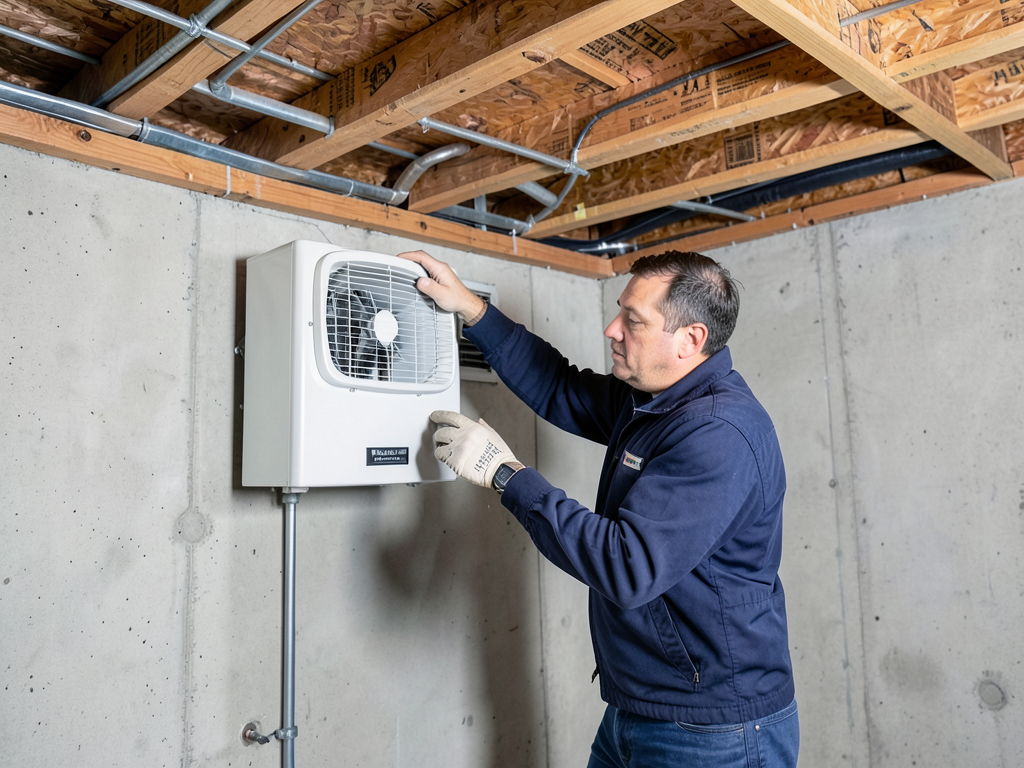
The Best HVAC Solutions for Your New Finished Basement in New Berlin
Finishing your basement in New Berlin means creating a comfortable living space that works with Wisconsin’s extreme seasonal swings. Your basement faces unique challenges: cold concrete floors, moisture from the high water table, and the stack effect that pulls cold air upward through your home. A properly designed HVAC system addresses these issues while meeting Waukesha County building codes and keeping energy costs manageable. Wisconsin Department of Safety and Professional Services HVAC requirements.
New Berlin homes built on heavy clay soil experience specific basement HVAC challenges. The soil’s poor drainage creates higher humidity levels below grade, while the area’s freeze-thaw cycles stress outdoor equipment. Understanding these local factors helps you choose the right heating and cooling approach for your finished basement. Outdoor Unit Not Spinning.
Specific Challenges of Heating & Cooling a New Berlin Basement
Basement HVAC installation in New Berlin requires addressing several local conditions. The area’s clay soil retains moisture, creating humidity levels that can reach 70% or higher in unfinished basements. This moisture migrates upward through concrete, affecting air quality and making cooling systems work harder during summer months. Cooling Tower Services.
Older New Berlin homes near the Moorland Road corridor often have low ceiling heights that complicate ductwork installation. Many mid-century ranches in the Rolling Meadows area feature 7-foot basement ceilings, leaving minimal space for traditional duct runs without sacrificing headroom.
The stack effect in multi-level Wisconsin homes creates another challenge. Cold air naturally sinks to your basement while warm air rises to upper floors. Without proper zoning, your basement HVAC system might constantly fight this natural air movement, leading to uneven temperatures and wasted energy. Energy Star certified HVAC equipment.
HVAC Solutions for Finished Basements
Choosing the right HVAC approach for your New Berlin basement depends on your existing system, basement size, and comfort goals. Here’s how different solutions compare:
| System Type | Installation Complexity | Energy Efficiency | Best For |
|---|---|---|---|
| Ductless Mini-Split | Low | Very High | Basements without existing ductwork |
| Extended Ductwork | Medium-High | Medium | Existing central systems with capacity |
| Zoned System | High | High | Multi-level homes needing separate control |
Ductless Mini-Split Systems
Ductless mini-splits offer the most flexible solution for New Berlin basements. These systems mount on walls or ceilings without requiring extensive ductwork modifications. For homes in Weatherstone or Regal Manor neighborhoods, where ceiling heights are limited, mini-splits provide heating and cooling without sacrificing valuable space.
Modern mini-splits operate efficiently in Wisconsin’s climate, functioning in temperatures as low as -13°F. They include built-in dehumidification, crucial for managing the moisture common in New Berlin basements. A typical installation requires only a small hole for refrigerant lines, minimizing structural modifications.
Extending Existing Ductwork
If your home has a central HVAC system with available capacity, extending ductwork to the basement might be cost-effective. However, this approach requires careful load calculations. The Wisconsin Department of Safety and Professional Services (DSPS) mandates specific requirements for combustion air and ventilation in finished basements. Fast AC Repair Services for Shorewood Residents Who Need Relief from the Humidity.
Extending ductwork in older New Berlin homes requires addressing several issues. Many homes near the New Berlin City Center were built before modern energy codes, meaning existing ducts might be undersized for additional basement runs. You’ll need a Manual J load calculation to verify your system can handle the extra square footage. Why Your Bay View Bungalow Might Benefit from a Ductless Mini Split System.
Zoned HVAC Systems
Zoning systems use dampers in existing ductwork to direct heating and cooling where needed. For New Berlin homeowners with multi-level homes, zoning allows separate temperature control for basement living spaces. This approach prevents your basement from being too cold in winter or too warm in summer.
Installing zoning requires a compatible furnace and air handler, plus zone control panels. The system uses thermostats in different areas to open and close dampers automatically. This solution works well for finished basements in areas like Glen Ridge, where homes often have large, open lower levels.
Our Step-by-Step Installation Process
Professional basement HVAC installation in New Berlin follows specific steps to ensure code compliance and optimal performance. Here’s what to expect during your project: Who to Call for Honest and Professional Furnace Repair in West Allis.
- On-Site Assessment
Our technicians evaluate your basement’s layout, existing HVAC system capacity, and moisture conditions. We measure ceiling heights, check for adequate combustion air supply, and assess electrical capacity for new equipment.
- Load Calculations
We perform Manual J calculations to determine exact heating and cooling requirements. This involves measuring your basement’s square footage, insulation levels, window areas, and accounting for New Berlin’s climate data.
- Permit Acquisition
We handle Waukesha County mechanical permits, ensuring your installation meets all local codes. This includes submitting plans that show proper duct sizing, equipment clearances, and ventilation requirements.
- Installation
Our NATE-certified technicians install your chosen system, whether that’s mini-split heads, new ductwork, or zoning controls. We follow all DSPS requirements for combustion air openings and ensure proper condensate drainage.
- Final Testing
We verify system performance through temperature testing, airflow measurements, and humidity control verification. We also check that all safety controls function properly and that the system meets manufacturer specifications.
Moisture and Dehumidification Integration
Wisconsin’s climate creates specific moisture challenges for basement HVAC systems. New Berlin’s average annual precipitation exceeds 34 inches, and the area’s clay soil retains moisture near foundations. Your HVAC system must work with proper dehumidification to prevent mold growth and maintain comfort.
High-efficiency HVAC systems include features that address basement moisture. Variable-speed air handlers run longer at lower speeds, removing more humidity than single-speed units. This continuous air circulation helps prevent the cold spots where condensation forms on basement walls and windows.
For severe moisture problems common in areas near Underwood Creek, we recommend dedicated dehumidification systems. These units can remove 70-100 pints of water per day, working alongside your HVAC system to maintain 45-55% relative humidity levels recommended by the EPA for indoor air quality.
Code Compliance and Safety Requirements
Wisconsin building codes contain specific requirements for basement HVAC installations. The Wisconsin Uniform Dwelling Code (UDC) Chapter 23 covers mechanical systems, including requirements for combustion air in finished basements with fuel-burning appliances.
For basements with gas furnaces or water heaters, you must provide adequate combustion air. This typically means two permanent openings: one within 12 inches of the ceiling and one within 12 inches of the floor. Each opening must provide 1 square inch of free area per 1,000 BTU/hour of appliance input.
The National Fire Protection Association (NFPA) 54 standard also applies to basement installations. This code requires specific clearances around gas appliances and proper venting to prevent carbon monoxide accumulation. Our technicians verify all installations meet these safety standards during final inspections.
Energy Efficiency and Cost Considerations
Energy efficiency plays a crucial role in basement HVAC decisions. High-efficiency systems with SEER ratings of 16 or higher can reduce cooling costs by 20-30% compared to older units. In New Berlin’s climate, where air conditioning runs 3-4 months annually, these savings add up quickly.
Energy Star certified equipment meets strict efficiency guidelines set by the EPA. These systems often qualify for rebates through Wisconsin’s Focus on Energy program, potentially saving you $300-500 on installation costs. Our team helps you navigate these incentives and select qualifying equipment.
Proper system sizing prevents energy waste. Oversized equipment cycles on and off frequently, reducing efficiency and causing temperature swings. Our Manual J calculations ensure your basement HVAC system matches your exact heating and cooling needs without excess capacity.
Why New Berlin Homeowners Choose Professional Installation
Professional installation ensures your basement HVAC system performs reliably for years. Our NATE-certified technicians understand New Berlin’s specific challenges, from the area’s soil conditions to local building code requirements. We’ve installed systems in neighborhoods throughout the area, including Rolling Meadows, Glen Ridge, and near New Berlin Hills Golf Course.
Professional installation includes warranty protection and code compliance verification. DIY installations might void equipment warranties and fail to meet local requirements, potentially causing issues when you sell your home. Our work includes all necessary permits and passes final inspections from Waukesha County inspectors.
We provide detailed system documentation, including maintenance schedules and troubleshooting guides. This information helps you maximize your investment and identify potential issues before they become major problems. Our maintenance plans include seasonal checkups to keep your system running efficiently year-round.
Frequently Asked Questions
How much does basement HVAC installation cost in New Berlin?
Costs vary based on system type and installation complexity. Ductless mini-splits typically range from $3,500 to $7,000, while extending existing ductwork might cost $5,000 to $12,000. We provide detailed quotes after our on-site assessment and load calculations.
Can I install HVAC myself in my finished basement?
DIY installation is not recommended due to code requirements and safety concerns. Wisconsin law requires licensed HVAC contractors for most installations, and improper work can create carbon monoxide hazards or moisture problems. Professional installation ensures warranty protection and code compliance.
How long does basement HVAC installation take?
Most installations complete in 1-3 days, depending on system complexity. Mini-split installations typically finish in one day, while extensive ductwork modifications might require 2-3 days. We coordinate all work to minimize disruption to your home.
Will my basement HVAC system work during power outages?
Standard HVAC systems require electricity to operate. However, many New Berlin homeowners install whole-house generators to power essential systems during outages. We can recommend generator sizes based on your HVAC equipment and other critical loads.. Read more about Why a Whole House Dehumidifier is the Only Way to Survive a Grafton Summer.
Take the Next Step for Your Finished Basement
Don’t let temperature problems ruin your finished basement investment. Whether you’re dealing with cold drafts in winter or humidity issues in summer, we have solutions that work for New Berlin’s specific climate conditions.
Our team provides free consultations to evaluate your basement’s HVAC needs. We’ll assess your existing system, measure your space, and recommend the most cost-effective solution for your comfort goals. Every recommendation includes detailed pricing and timeline estimates.
Call (414) 387-8977 today to schedule your basement HVAC assessment. We’ll help you create a comfortable, energy-efficient space that adds value to your New Berlin home. Don’t wait until the next extreme weather event to address your basement comfort issues.
Pick up the phone and call (414) 387-8977 before the next storm hits. Our NATE-certified technicians are ready to solve your basement HVAC challenges with solutions that last.
{
“@context”: “https://schema.org”,
“@type”: “BlogPosting”,
“headline”: “The Best HVAC Solutions for Your New Finished Basement in New Berlin”,
“description”: “Discover expert HVAC solutions for your New Berlin finished basement. Learn about zoning systems, dehumidification, and code-compliant installations that keep your space comfortable year-round.”,
“wordCount”: 1725,
“datePublished”: “2026-04-23T13:38:00.000Z”,
“dateModified”: “2026-04-23T13:38:00.000Z”,
“inLanguage”: “en-US”,
“mainEntityOfPage”: {
“@type”: “WebPage”,
“@id”: “https://firstchoicehvacmilwaukee.com”
},
“publisher”: {
“@type”: “LocalBusiness”,
“name”: “First Choice HVAC Milwaukee”,
“url”: “https://firstchoicehvacmilwaukee.com”
},
“author”: {
“@type”: “Organization”,
“name”: “First Choice HVAC Milwaukee”,
“url”: “https://firstchoicehvacmilwaukee.com”
},
“image”: {
“@type”: “ImageObject”,
“url”: “https://firstchoicehvacmilwaukee.com/wp-content/uploads/2026/03/the-best-hvac-solutions-for-your-new-finished-base-1.png”
}
}
{
“@context”: “https://schema.org”,
“@type”: “HVACBusiness”,
“name”: “First Choice HVAC Milwaukee”,
“url”: “https://firstchoicehvacmilwaukee.com”,
“address”: {
“@type”: “PostalAddress”,
“addressLocality”: “Milwaukee”
},
“areaServed”: {
“@type”: “City”,
“name”: “Milwaukee”
}
}
{
“@context”: “https://schema.org”,
“@type”: “FAQPage”,
“mainEntity”: [
{
“@type”: “Question”,
“name”: “How much does basement HVAC installation cost in New Berlin?”,
“acceptedAnswer”: {
“@type”: “Answer”,
“text”: “Costs vary based on system type and installation complexity. Ductless mini-splits typically range from $3,500 to $7,000, while extending existing ductwork might cost $5,000 to $12,000. We provide detailed quotes after our on-site assessment and load calculations.”
}
},
{
“@type”: “Question”,
“name”: “Can I install HVAC myself in my finished basement?”,
“acceptedAnswer”: {
“@type”: “Answer”,
“text”: “DIY installation is not recommended due to code requirements and safety concerns. Wisconsin law requires licensed HVAC contractors for most installations, and improper work can create carbon monoxide hazards or moisture problems. Professional installation ensures warranty protection and code compliance.”
}
},
{
“@type”: “Question”,
“name”: “How long does basement HVAC installation take?”,
“acceptedAnswer”: {
“@type”: “Answer”,
“text”: “Most installations complete in 1-3 days, depending on system complexity. Mini-split installations typically finish in one day, while extensive ductwork modifications might require 2-3 days. We coordinate all work to minimize disruption to your home.”
}
},
{
“@type”: “Question”,
“name”: “Will my basement HVAC system work during power outages?”,
“acceptedAnswer”: {
“@type”: “Answer”,
“text”: “Standard HVAC systems require electricity to operate. However, many New Berlin homeowners install whole-house generators to power essential systems during outages. We can recommend generator sizes based on your HVAC equipment and other critical loads.”
}
}
]
}
{
“@context”: “https://schema.org”,
“@type”: “HowTo”,
“name”: “Basement HVAC Installation Process”,
“step”: [
{
“@type”: “HowToStep”,
“position”: 1,
“name”: “On-Site Assessment”,
“text”: “Our technicians evaluate your basement’s layout, existing HVAC system capacity, and moisture conditions. We measure ceiling heights, check for adequate combustion air supply, and assess electrical capacity for new equipment.”
},
{
“@type”: “HowToStep”,
“position”: 2,
“name”: “Load Calculations”,
“text”: “We perform Manual J calculations to determine exact heating and cooling requirements. This involves measuring your basement’s square footage, insulation levels, window areas, and accounting for New Berlin’s climate data.”
},
{
“@type”: “HowToStep”,
“position”: 3,
“name”: “Permit Acquisition”,
“text”: “We handle Waukesha County mechanical permits, ensuring your installation meets all local codes. This includes submitting plans that show proper duct sizing, equipment clearances, and ventilation requirements.”
},
{
“@type”: “HowToStep”,
“position”: 4,
“name”: “Installation”,
“text”: “Our NATE-certified technicians install your chosen system, whether that’s mini-split heads, new ductwork, or zoning controls. We follow all DSPS requirements for combustion air openings and ensure proper condensate drainage.”
},
{
“@type”: “HowToStep”,
“position”: 5,
“name”: “Final Testing”,
“text”: “We verify system performance through temperature testing, airflow measurements, and humidity control verification. We also check that all safety controls function properly and that the system meets manufacturer specifications.”
}
],
“image”: “https://firstchoicehvacmilwaukee.com/wp-content/uploads/2026/03/the-best-hvac-solutions-for-your-new-finished-base-1.png”
}
{
“@context”: “https://schema.org”,
“@type”: “BreadcrumbList”,
“itemListElement”: [
{
“@type”: “ListItem”,
“position”: 1,
“name”: “Home”,
“item”: “https://firstchoicehvacmilwaukee.com”
},
{
“@type”: “ListItem”,
“position”: 2,
“name”: “Blog”,
“item”: “https://firstchoicehvacmilwaukee.com/blog”
},
{
“@type”: “ListItem”,
“position”: 3,
“name”: “The Best HVAC Solutions for Your New Finished Basement in New Berlin”
}
]
}
{
“@context”: “https://schema.org”,
“@type”: “Service”,
“serviceType”: “HVAC”,
“provider”: {
“@type”: “LocalBusiness”,
“name”: “First Choice HVAC Milwaukee”,
“url”: “https://firstchoicehvacmilwaukee.com”
},
“areaServed”: {
“@type”: “City”,
“name”: “Milwaukee”
},
“description”: “Discover expert HVAC solutions for your New Berlin finished basement. Learn about zoning systems, dehumidification, and code-compliant installations that keep your space comfortable year-round.”
}