
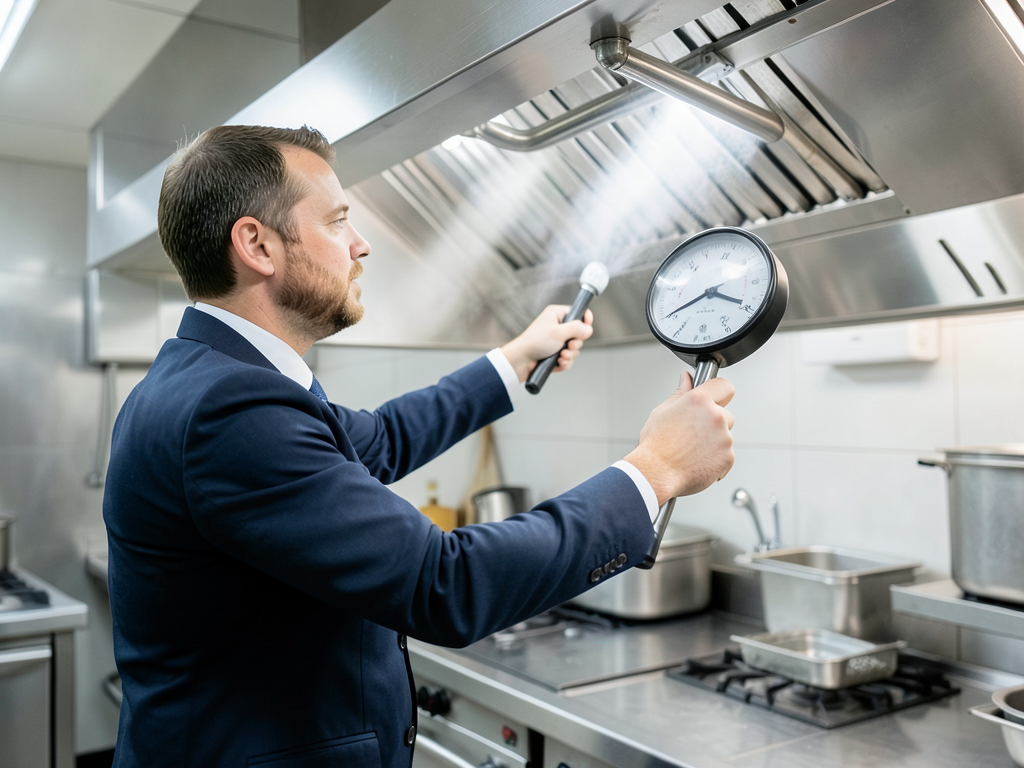
Your kitchen exhaust hood is pulling 5,000 CFM of air out, but your makeup air unit is only supplying 3,000. That 2,000 CFM deficit is creating a vacuum that pulls cold outside air through every crack, making your dining room freezing while your kitchen boils. This is the exact pressure imbalance that plagues Milwaukee restaurants during lake-effect winters.
Commercial kitchen HVAC balancing is the process of testing, adjusting, and calibrating all ventilation components to ensure proper air exchange rates. In Milwaukee’s climate, where winter temperatures regularly drop below zero and summer humidity exceeds 80%, this balancing becomes critical for both comfort and code compliance. The City of Milwaukee Department of Neighborhood Services requires commercial kitchens to maintain specific pressure relationships to prevent smoke migration and ensure proper hood capture efficiency. City of Milwaukee Department of Neighborhood Services.
The problem intensifies in Milwaukee’s older commercial buildings where original HVAC systems were designed for retail spaces, not high-heat kitchen environments. Your 1920s Third Ward building wasn’t built to handle the heat load from modern commercial cooking equipment. Without proper balancing, you’re fighting a losing battle against physics and building code requirements.
How Commercial Kitchen HVAC Systems Create Pressure Imbalances
Commercial kitchens operate on a simple principle: exhaust fans remove contaminated air, and makeup air units replace it. When these systems aren’t properly matched, pressure problems cascade through your entire building. Your exhaust hood creates negative pressure, while your makeup air unit should create positive pressure to offset it.
The math is straightforward but critical. If your kitchen exhaust hood moves 4,000 CFM and your makeup air unit only provides 3,000 CFM, you have a 1,000 CFM negative pressure. This forces cold air infiltration through doors, windows, and any other openings. In Milwaukee winters, that infiltration can bring in -10°F air that drops your dining room temperature by 15-20 degrees.
NFPA 96, the national standard for commercial kitchen ventilation, requires that makeup air be introduced in a manner that doesn’t interfere with the capture and containment of cooking vapors. This means your makeup air must be delivered at the right temperature, velocity, and location to support your exhaust hood’s operation. The standard also mandates that makeup air systems include filters and be accessible for cleaning. NFPA 96 standards.
Milwaukee’s Climate Makes Balancing Even More Critical
Milwaukee’s extreme seasonal temperature swings create unique challenges for commercial kitchen ventilation. During summer, your makeup air unit must cool and dehumidify incoming air, while in winter it must heat it to prevent drafts. The system needs to respond to both outdoor conditions and kitchen heat loads that can exceed 150,000 BTU per hour from cooking equipment alone.
Lake-effect humidity adds another layer of complexity. Summer afternoons when the lake breeze kicks in can push humidity levels above 85%, making your makeup air unit work overtime to dehumidify incoming air. If your system isn’t properly sized or balanced, you’ll see condensation on cold surfaces, creating slip hazards and potential mold growth in ceiling spaces.
The rapid temperature swings Milwaukee experiences also stress HVAC components. A makeup air unit that works fine in October might struggle when a polar vortex hits in January. The heating coils, filters, and fans all need to be sized for the worst-case scenario, not just average conditions. Why Your Bay View Bungalow Might Benefit from a Ductless Mini Split System.
Common Pressure Problems in Milwaukee Restaurants
Restaurants in Walker’s Point and the Third Ward frequently experience negative pressure issues due to building age and design. Many of these structures were built before modern commercial kitchen ventilation standards existed. The original HVAC systems weren’t designed to handle the heat and grease loads from today’s cooking equipment.
Whistling doors are often the first sign of pressure problems. When you hear that sound, your building is actively sucking air through every opening to equalize pressure. This isn’t just annoying—it’s costing you money in heating and cooling expenses while making your customers uncomfortable.
Smoke migration between kitchen and dining areas indicates severe pressure imbalances. If cooking odors are reaching your customers, your exhaust system isn’t capturing properly, and your makeup air isn’t being delivered correctly. This violates health codes and creates an unpleasant dining experience.
Energy bills that spike during extreme weather are another red flag. When your building is under negative pressure, your heating and cooling systems work overtime to compensate for the unwanted air infiltration. A properly balanced system can reduce HVAC energy costs by 15-25% in commercial kitchens.
The Technical Process of Kitchen HVAC Balancing
Professional kitchen HVAC balancing follows a systematic process that starts with diagnostic testing. Technicians use specialized equipment to measure airflow rates, pressure differentials, and temperature across all ventilation components. This isn’t guesswork—it’s precise measurement using calibrated instruments. Who to Call for Honest and Professional Furnace Repair in West Allis.
The process begins with measuring existing airflow conditions. Technicians use balometers to measure exhaust hood capture velocities and anemometers to verify makeup air delivery rates. These measurements establish the baseline conditions that need correction. Without accurate measurements, you’re just making random adjustments.
Next comes damper adjustment and balancing. Supply and return air dampers are adjusted to achieve the target airflow rates specified by the equipment manufacturer and local codes. This often requires multiple iterations as changing one component affects the entire system’s performance.
Static pressure testing ensures the ductwork can handle the required airflow without excessive resistance. Undersized ducts or excessive fittings can create pressure drops that reduce system efficiency. Technicians measure static pressure at multiple points to identify restrictions.
Temperature and humidity control verification confirms that makeup air is being delivered at appropriate conditions. The air should be close to room temperature and humidity levels to prevent uncomfortable drafts and condensation issues.
NFPA 96 Compliance and Milwaukee Code Requirements
Milwaukee enforces NFPA 96 standards through the Department of Neighborhood Services. Commercial kitchens must maintain specific ventilation rates based on equipment type and cooking intensity. Type I hoods for grease-producing equipment require higher capture velocities than Type II hoods for heat and moisture removal. Fast AC Repair Services for Shorewood Residents Who Need Relief from the Humidity.
The City of Milwaukee requires commercial kitchen ventilation plans to be submitted for permit approval. These plans must show equipment layouts, hood sizes, exhaust rates, and makeup air provisions. Inspections verify that installed systems match approved plans and operate according to code requirements.
Wisconsin’s energy code also impacts kitchen ventilation. Make-up air units must meet minimum efficiency standards, and systems must include controls that reduce ventilation rates when cooking equipment isn’t in use. This prevents energy waste while maintaining code compliance.
Health department regulations require that ventilation systems prevent cross-contamination between food preparation areas and dining spaces. Pressure relationships must ensure that contaminated air flows toward exhaust points, not into customer areas.
Energy Recovery and Cost Savings Opportunities
Energy recovery ventilators (ERVs) can significantly reduce the operating costs of commercial kitchen ventilation. These units transfer heat and moisture between exhaust and supply air streams, reducing the load on heating and cooling equipment. In Milwaukee’s climate, ERVs can recover 60-80% of the energy that would otherwise be wasted.
Variable frequency drives (VFDs) on exhaust and supply fans allow systems to modulate based on actual cooking loads. Instead of running at full speed all the time, fans can slow down during low-activity periods, reducing energy consumption while maintaining proper ventilation.
Demand-controlled kitchen ventilation (DCKV) systems use sensors to monitor cooking activity and adjust ventilation rates accordingly. These systems can reduce energy costs by 30-50% while ensuring adequate ventilation when needed. The sensors detect heat, smoke, and sometimes even cooking odors to determine ventilation requirements.
Focus on Energy, Wisconsin’s utility-sponsored energy efficiency program, offers rebates for high-efficiency kitchen ventilation equipment. These rebates can cover 20-30% of the cost of qualifying upgrades, making energy-saving improvements more affordable for restaurant owners.
Makeup Air Unit Selection and Sizing
Choosing the right makeup air unit is critical for system performance. The unit must be sized to match your exhaust hood’s airflow rate while accounting for Milwaukee’s climate conditions. A unit sized for Phoenix won’t work in Milwaukee’s humid continental climate.
Direct-fired makeup air units provide efficient heating by burning gas directly in the air stream. These units offer 100% thermal efficiency and can raise air temperature by 100-150 degrees Fahrenheit. They’re ideal for Milwaukee’s cold winters but require proper venting and combustion air provisions.
Indirect-fired units separate the combustion process from the air stream, eliminating the risk of combustion byproducts entering the building. These units are slightly less efficient but provide better indoor air quality. They’re often preferred for restaurants with strict air quality requirements.
Electric makeup air units eliminate combustion concerns but have higher operating costs in Milwaukee, where electricity rates are above the national average. They’re best suited for smaller applications or locations where gas service isn’t available.
Diagnostic Testing and Performance Verification
Professional technicians use specialized diagnostic tools to verify system performance. A balometer measures airflow through exhaust hoods by capturing the velocity pressure across a known area. This provides accurate CFM measurements that can’t be obtained through visual inspection alone.
Manometers measure pressure differences between spaces, helping identify pressure imbalances that cause comfort and code compliance issues. These instruments can detect pressure differences as small as 0.01 inches of water column, which is enough to cause noticeable air movement.
Thermal imaging cameras reveal temperature patterns that indicate system problems. Cold spots on walls or ceilings might indicate air infiltration, while hot spots could signal overheating equipment or inadequate ventilation. These cameras see what’s invisible to the naked eye.
Smoke testing visually confirms airflow patterns and capture efficiency. Technicians introduce non-toxic smoke near cooking equipment to verify that it’s being captured by the hood and exhausted properly. This test reveals problems that airflow measurements alone might miss.
Maintenance Requirements for Balanced Systems
Even perfectly balanced systems drift out of specification over time. Filters clog, dampers stick, and components wear out. Regular maintenance is essential to maintain performance and prevent the problems that led you to seek help in the first place.
Filter replacement schedules depend on cooking intensity and equipment type. Restaurants using solid fuel cooking may need monthly filter changes, while those using electric equipment might go six months between changes. The key is monitoring pressure drop across filters and replacing them when performance degrades.
Ductwork inspection should occur annually to check for grease accumulation, especially in exhaust systems. NFPA 96 requires regular cleaning of grease-laden ducts, with frequency based on cooking volume and fuel type. Neglecting this maintenance creates fire hazards and reduces system efficiency.
Belt inspection and replacement prevent fan performance issues. Worn or loose belts reduce airflow and increase energy consumption. Most commercial kitchen fans should have belts inspected every six months and replaced annually or as needed.
Control calibration ensures that variable speed drives, temperature sensors, and pressure switches operate correctly. These components drift over time, causing systems to operate outside design parameters. Annual calibration maintains optimal performance.
Cost-Benefit Analysis of Professional Balancing
The cost of professional kitchen HVAC balancing typically ranges from $2,000 to $8,000 depending on system complexity and building conditions. While this might seem expensive, the return on investment often justifies the expense within 12-24 months through energy savings and improved operations.
Energy savings from a properly balanced system can reduce HVAC costs by 15-30%. For a restaurant spending $2,000 monthly on HVAC, that’s $3,600-$10,800 in annual savings. The system typically pays for itself in 1-2 years through reduced utility bills alone.
Improved comfort leads to better customer experiences and potentially higher sales. Customers who are comfortable stay longer and spend more. They also leave better reviews and return more frequently. These benefits are harder to quantify but can significantly impact your bottom line.
Reduced maintenance costs result from systems operating within design parameters rather than struggling against pressure imbalances. Fans last longer, heating and cooling equipment experiences less stress, and you avoid costly emergency repairs caused by system failures. Emergency HVAC Help Anywhere in Milwaukee When Your System Fails at Midnight.
Case Study: Walker’s Point Restaurant Transformation
A 3,000-square-foot restaurant in Milwaukee’s Walker’s Point neighborhood was experiencing severe temperature complaints from customers and high energy bills during winter months. The dining room would drop to 62°F while the kitchen exceeded 85°F. Energy bills averaged $3,500 monthly during winter.
Diagnostic testing revealed the makeup air unit was delivering only 2,800 CFM against a 4,000 CFM exhaust requirement, creating a 1,200 CFM negative pressure. The makeup air unit was also undersized for Milwaukee’s climate, unable to heat incoming air sufficiently.
The solution involved upgrading to a 5,000 CFM direct-fired makeup air unit with proper heating capacity for -10°F outdoor air. Supply air ducts were resized and repositioned to eliminate drafts. Exhaust hood dampers were adjusted to optimize capture efficiency.
Post-installation testing showed the dining room maintaining 70-72°F while the kitchen stayed at 78-80°F. Energy bills dropped to $2,200 monthly during winter, a $1,300 monthly savings. The system paid for itself in 14 months through energy savings alone.
Frequently Asked Questions
How often should commercial kitchen HVAC systems be balanced?
Professional balancing should be performed whenever major changes are made to kitchen equipment, exhaust hoods, or makeup air units. Annual maintenance checks can identify drift from optimal settings. Most restaurants benefit from professional balancing every 2-3 years as part of regular HVAC maintenance.
What’s the typical cost for kitchen HVAC balancing in Milwaukee?
Professional balancing services in Milwaukee typically range from $2,000 to $8,000 depending on system size and complexity. Simple adjustments might cost $1,500, while comprehensive testing and balancing of complex systems can exceed $10,000. The investment often pays for itself through energy savings within 12-24 months.
Can I balance my kitchen ventilation system myself?
While basic adjustments are possible, professional balancing requires specialized equipment and expertise. Balometers, manometers, and thermal imaging cameras cost thousands of dollars. More importantly, understanding how to interpret measurements and make proper adjustments requires years of experience. DIY attempts often create new problems while failing to solve existing ones.
How long does professional kitchen HVAC balancing take?
Most commercial kitchen balancing projects take 4-8 hours for initial testing and adjustments. Complex systems or those requiring equipment upgrades may take 1-2 days. The work can typically be scheduled during off-hours to minimize disruption to restaurant operations.
Will balancing my system help me pass health inspections?
Yes, proper kitchen ventilation balancing is often required for health department approval. Balanced systems prevent smoke and odor migration, maintain proper temperatures, and ensure adequate ventilation rates. Many health inspectors specifically check pressure relationships and airflow rates during routine inspections.
What certifications should I look for in a kitchen HVAC balancing technician?
Look for technicians certified by NEBB (National Environmental Balancing Bureau) or AABC (Associated Air Balance Council). These certifications require extensive training and testing in airflow measurement, system balancing, and diagnostic procedures. Experience with commercial kitchen ventilation and NFPA 96 compliance is also essential.
How do I know if my kitchen has pressure problems?
Signs of pressure problems include whistling doors, difficulty opening exterior doors, smoke migration into dining areas, cold drafts in winter, hot spots in summer, and inconsistent temperatures between kitchen and dining room. If customers complain about temperature or you notice these symptoms, your system likely needs balancing.
Will balancing affect my fire suppression system?
Proper balancing actually improves fire suppression system performance. When exhaust and makeup air are balanced, fire suppression systems operate as designed. Negative pressure can interfere with suppression agent distribution, while positive pressure ensures proper coverage. Always coordinate balancing work with your fire suppression service provider.
What’s the relationship between kitchen HVAC balancing and energy efficiency?
Balanced systems operate at peak efficiency by eliminating pressure-related energy waste. When your building isn’t fighting negative pressure, your heating and cooling equipment doesn’t work overtime to compensate for air infiltration. This can reduce HVAC energy consumption by 15-30% while improving comfort and air quality.
How does Milwaukee’s climate affect kitchen ventilation requirements?
Milwaukee’s cold winters and humid summers create extreme demands on makeup air units. Systems must heat air from -10°F to 70-80°F in winter and cool/dehumidify 85°F air in summer. This requires properly sized equipment and controls that can respond to rapidly changing outdoor conditions.
Can balancing help with humidity control in my kitchen?
Yes, proper balancing is essential for humidity control. When makeup air is delivered at the right temperature and velocity, it prevents condensation on cold surfaces and reduces overall humidity levels. This improves comfort, prevents slip hazards, and protects equipment from moisture damage.
What documentation should I receive after balancing?
Professional balancing should include a comprehensive report showing initial conditions, adjustments made, final airflow measurements, and system performance data. This documentation proves code compliance and provides a baseline for future maintenance. Many jurisdictions require this documentation for permit final inspections.
- Document Your Symptoms
Write down specific problems like temperature complaints, high energy bills, or smoke migration. Note when these issues occur most frequently.
- Check Your Equipment Ratings
Find the CFM ratings for your exhaust hood and makeup air unit. If you can’t locate this information, a technician can help identify your equipment.
- Schedule Professional Testing
Call (414) 387-8977 to schedule diagnostic testing. Professional testing will measure actual airflow rates and identify pressure imbalances.
- Review the Assessment Report
Review the technician’s findings and recommendations. The report should include specific measurements and proposed solutions.
- Implement Recommended Solutions
Follow through with the recommended balancing, repairs, or equipment upgrades to resolve your ventilation problems.
Your Milwaukee restaurant kitchen doesn’t have to be a battleground between heat and cold. Professional HVAC balancing can transform your space from an uncomfortable, energy-wasting environment into a comfortable, efficient operation that keeps both your kitchen staff and dining room customers happy.
The combination of Milwaukee’s extreme climate, strict building codes, and the high demands of commercial cooking creates unique challenges that require specialized expertise. Generic HVAC contractors might not understand the specific requirements of NFPA 96 compliance or the impact of lake-effect humidity on system performance.
Don’t let another season of customer complaints and high energy bills pass by. The solution to your kitchen ventilation problems is just a phone call away. Professional technicians with the right equipment and experience can diagnose your specific issues and implement solutions that work for your unique situation.
Call (414) 387-8977 today to schedule your commercial kitchen HVAC assessment. Our certified technicians will measure your system’s performance, identify pressure imbalances, and recommend solutions that bring comfort to your dining room while keeping your kitchen at optimal working temperatures. Stop fighting your ventilation system and start enjoying the benefits of a properly balanced commercial kitchen.
Whether you’re in the Historic Third Ward, Walker’s Point, or anywhere else in the Milwaukee metro area, we understand the specific challenges your restaurant faces. Our experience with local building codes, climate conditions, and commercial kitchen requirements means we can solve problems that others might miss. What to Do When Your Historic East Side Home’s Boiler Stops Working.
Don’t wait until the next polar vortex or heat wave makes your problems unbearable. Pick up the phone and call (414) 387-8977 before the next storm hits. Your customers, your staff, and your energy bills will thank you for taking action now.
{
“@context”: “https://schema.org”,
“@type”: “BlogPosting”,
“headline”: “Why Your Milwaukee Restaurant Kitchen Is Boiling While the Dining Room Stays Cold”,
“description”: “Discover why Milwaukee restaurant kitchens suffer from extreme heat while dining rooms freeze. Learn how professional HVAC balancing solves pressure, code, and comfort issues.”,
“wordCount”: 3205,
“datePublished”: “2026-05-16T11:30:00.000Z”,
“dateModified”: “2026-05-16T11:30:00.000Z”,
“inLanguage”: “en-US”,
“mainEntityOfPage”: {
“@type”: “WebPage”,
“@id”: “https://firstchoicehvacmilwaukee.com”
},
“publisher”: {
“@type”: “LocalBusiness”,
“name”: “First Choice HVAC Milwaukee”,
“url”: “https://firstchoicehvacmilwaukee.com”
},
“author”: {
“@type”: “Organization”,
“name”: “First Choice HVAC Milwaukee”,
“url”: “https://firstchoicehvacmilwaukee.com”
},
“image”: {
“@type”: “ImageObject”,
“url”: “https://firstchoicehvacmilwaukee.com/wp-content/uploads/2026/03/why-your-milwaukee-restaurant-kitchen-is-boiling-w-1.png”
}
}
{
“@context”: “https://schema.org”,
“@type”: “HVACBusiness”,
“name”: “First Choice HVAC Milwaukee”,
“url”: “https://firstchoicehvacmilwaukee.com”,
“address”: {
“@type”: “PostalAddress”,
“addressLocality”: “Milwaukee”
},
“areaServed”: {
“@type”: “City”,
“name”: “Milwaukee”
}
}
{
“@context”: “https://schema.org”,
“@type”: “FAQPage”,
“mainEntity”: [
{
“@type”: “Question”,
“name”: “How often should commercial kitchen HVAC systems be balanced?”,
“acceptedAnswer”: {
“@type”: “Answer”,
“text”: “Professional balancing should be performed whenever major changes are made to kitchen equipment, exhaust hoods, or makeup air units. Annual maintenance checks can identify drift from optimal settings. Most restaurants benefit from professional balancing every 2-3 years as part of regular HVAC maintenance.”
}
},
{
“@type”: “Question”,
“name”: “What’s the typical cost for kitchen HVAC balancing in Milwaukee?”,
“acceptedAnswer”: {
“@type”: “Answer”,
“text”: “Professional balancing services in Milwaukee typically range from $2,000 to $8,000 depending on system size and complexity. Simple adjustments might cost $1,500, while comprehensive testing and balancing of complex systems can exceed $10,000. The investment often pays for itself through energy savings within 12-24 months.”
}
},
{
“@type”: “Question”,
“name”: “Can I balance my kitchen ventilation system myself?”,
“acceptedAnswer”: {
“@type”: “Answer”,
“text”: “While basic adjustments are possible, professional balancing requires specialized equipment and expertise. Balometers, manometers, and thermal imaging cameras cost thousands of dollars. More importantly, understanding how to interpret measurements and make proper adjustments requires years of experience. DIY attempts often create new problems while failing to solve existing ones.”
}
},
{
“@type”: “Question”,
“name”: “How long does professional kitchen HVAC balancing take?”,
“acceptedAnswer”: {
“@type”: “Answer”,
“text”: “Most commercial kitchen balancing projects take 4-8 hours for initial testing and adjustments. Complex systems or those requiring equipment upgrades may take 1-2 days. The work can typically be scheduled during off-hours to minimize disruption to restaurant operations.”
}
},
{
“@type”: “Question”,
“name”: “Will balancing my system help me pass health inspections?”,
“acceptedAnswer”: {
“@type”: “Answer”,
“text”: “Yes, proper kitchen ventilation balancing is often required for health department approval. Balanced systems prevent smoke and odor migration, maintain proper temperatures, and ensure adequate ventilation rates. Many health inspectors specifically check pressure relationships and airflow rates during routine inspections.”
}
},
{
“@type”: “Question”,
“name”: “What certifications should I look for in a kitchen HVAC balancing technician?”,
“acceptedAnswer”: {
“@type”: “Answer”,
“text”: “Look for technicians certified by NEBB (National Environmental Balancing Bureau) or AABC (Associated Air Balance Council). These certifications require extensive training and testing in airflow measurement, system balancing, and diagnostic procedures. Experience with commercial kitchen ventilation and NFPA 96 compliance is also essential.”
}
},
{
“@type”: “Question”,
“name”: “How do I know if my kitchen has pressure problems?”,
“acceptedAnswer”: {
“@type”: “Answer”,
“text”: “Signs of pressure problems include whistling doors, difficulty opening exterior doors, smoke migration into dining areas, cold drafts in winter, hot spots in summer, and inconsistent temperatures between kitchen and dining room. If customers complain about temperature or you notice these symptoms, your system likely needs balancing.”
}
},
{
“@type”: “Question”,
“name”: “Will balancing affect my fire suppression system?”,
“acceptedAnswer”: {
“@type”: “Answer”,
“text”: “Proper balancing actually improves fire suppression system performance. When exhaust and makeup air are balanced, fire suppression systems operate as designed. Negative pressure can interfere with suppression agent distribution, while positive pressure ensures proper coverage. Always coordinate balancing work with your fire suppression service provider.”
}
},
{
“@type”: “Question”,
“name”: “What’s the relationship between kitchen HVAC balancing and energy efficiency?”,
“acceptedAnswer”: {
“@type”: “Answer”,
“text”: “Balanced systems operate at peak efficiency by eliminating pressure-related energy waste. When your building isn’t fighting negative pressure, your heating and cooling equipment doesn’t work overtime to compensate for air infiltration. This can reduce HVAC energy consumption by 15-30% while improving comfort and air quality.”
}
},
{
“@type”: “Question”,
“name”: “How does Milwaukee’s climate affect kitchen ventilation requirements?”,
“acceptedAnswer”: {
“@type”: “Answer”,
“text”: “Milwaukee’s cold winters and humid summers create extreme demands on makeup air units. Systems must heat air from -10°F to 70-80°F in winter and cool/dehumidify 85°F air in summer. This requires properly sized equipment and controls that can respond to rapidly changing outdoor conditions.”
}
},
{
“@type”: “Question”,
“name”: “Can balancing help with humidity control in my kitchen?”,
“acceptedAnswer”: {
“@type”: “Answer”,
“text”: “Yes, proper balancing is essential for humidity control. When makeup air is delivered at the right temperature and velocity, it prevents condensation on cold surfaces and reduces overall humidity levels. This improves comfort, prevents slip hazards, and protects equipment from moisture damage.”
}
},
{
“@type”: “Question”,
“name”: “What documentation should I receive after balancing?”,
“acceptedAnswer”: {
“@type”: “Answer”,
“text”: “Professional balancing should include a comprehensive report showing initial conditions, adjustments made, final airflow measurements, and system performance data. This documentation proves code compliance and provides a baseline for future maintenance. Many jurisdictions require this documentation for permit final inspections.”
}
}
]
}
{
“@context”: “https://schema.org”,
“@type”: “HowTo”,
“name”: “How to Schedule Your Kitchen HVAC Assessment”,
“step”: [
{
“@type”: “HowToStep”,
“position”: 1,
“name”: “Document Your Symptoms”,
“text”: “Write down specific problems like temperature complaints, high energy bills, or smoke migration. Note when these issues occur most frequently.”
},
{
“@type”: “HowToStep”,
“position”: 2,
“name”: “Check Your Equipment Ratings”,
“text”: “Find the CFM ratings for your exhaust hood and makeup air unit. If you can’t locate this information, a technician can help identify your equipment.”
},
{
“@type”: “HowToStep”,
“position”: 3,
“name”: “Schedule Professional Testing”,
“text”: “Call (414) 387-8977 to schedule diagnostic testing. Professional testing will measure actual airflow rates and identify pressure imbalances.”
},
{
“@type”: “HowToStep”,
“position”: 4,
“name”: “Review the Assessment Report”,
“text”: “Review the technician’s findings and recommendations. The report should include specific measurements and proposed solutions.”
},
{
“@type”: “HowToStep”,
“position”: 5,
“name”: “Implement Recommended Solutions”,
“text”: “Follow through with the recommended balancing, repairs, or equipment upgrades to resolve your ventilation problems.”
}
],
“image”: “https://firstchoicehvacmilwaukee.com/wp-content/uploads/2026/03/why-your-milwaukee-restaurant-kitchen-is-boiling-w-1.png”
}
{
“@context”: “https://schema.org”,
“@type”: “BreadcrumbList”,
“itemListElement”: [
{
“@type”: “ListItem”,
“position”: 1,
“name”: “Home”,
“item”: “https://firstchoicehvacmilwaukee.com”
},
{
“@type”: “ListItem”,
“position”: 2,
“name”: “Blog”,
“item”: “https://firstchoicehvacmilwaukee.com/blog”
},
{
“@type”: “ListItem”,
“position”: 3,
“name”: “Why Your Milwaukee Restaurant Kitchen Is Boiling While the Dining Room Stays Cold”
}
]
}
{
“@context”: “https://schema.org”,
“@type”: “Service”,
“serviceType”: “HVAC”,
“provider”: {
“@type”: “LocalBusiness”,
“name”: “First Choice HVAC Milwaukee”,
“url”: “https://firstchoicehvacmilwaukee.com”
},
“areaServed”: {
“@type”: “City”,
“name”: “Milwaukee”
},
“description”: “Discover why Milwaukee restaurant kitchens suffer from extreme heat while dining rooms freeze. Learn how professional HVAC balancing solves pressure, code, and comfort issues.”
}