
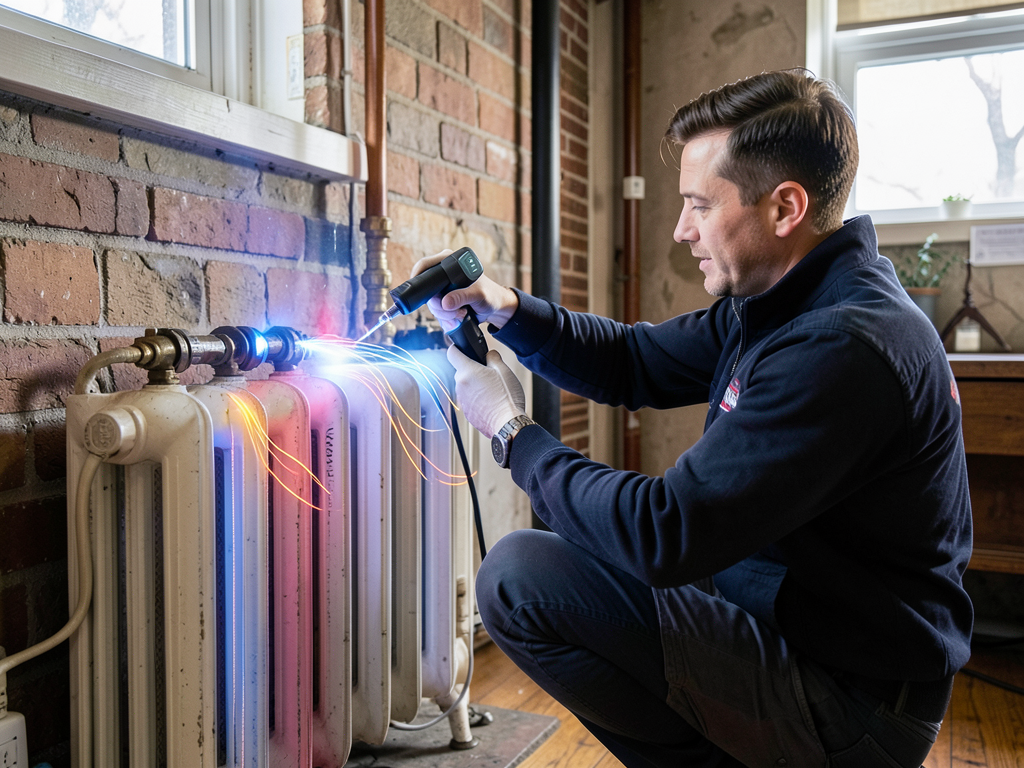
How to Tell if Your Yankee Hill Home is Better Suited for Radiators or Forced Air
Your Yankee Hill home sits in one of Milwaukee’s most distinctive historic districts, where early 20th-century architecture meets modern living demands. The question of radiators versus forced air heating isn’t just about comfort—it’s about preserving your home’s character while meeting today’s efficiency standards. This guide cuts through the marketing noise to show you exactly what works for Milwaukee’s climate, your home’s construction, and your family’s needs. What to Do When Your Historic East Side Home’s Boiler Stops Working.
The Milwaukee Climate Factor: Why Your Choice Matters More Here
Wisconsin’s Zone 6 climate demands heating systems that can handle polar vortexes dropping to -20°F and rapid temperature swings that stress equipment. Lake Michigan’s proximity creates high humidity levels that affect how heat distributes through your home. Steam radiators provide consistent, gentle heat that many Milwaukee homeowners swear by, while forced air systems offer the flexibility of central air conditioning—crucial for those humid summer months. New HVAC System Cost 2026.
The key difference? Radiant heat warms objects and people directly, creating that cozy feeling without drying out the air. Forced air heats the air itself, circulating quickly but potentially creating drafts and temperature variations. In Yankee Hill’s older homes with plaster walls and original windows, this distinction becomes critical.
How Each System Actually Works in Your Home
Radiators operate through hydronic heating—water heated in a boiler circulates through pipes to cast-iron or baseboard radiators. The heat radiates outward, warming surfaces and creating natural convection currents. Steam systems use the same principle but with actual steam, requiring careful pressure management and regular maintenance of steam traps.
Forced air systems use a furnace to heat air, which a blower then pushes through ductwork. This method delivers heat rapidly but can create temperature stratification—warm air rising to ceilings while floors stay cool. The ductwork also becomes a pathway for dust, allergens, and humidity distribution throughout your home.
Diagnostic Tip: Check your basement or utility area. If you see a large, cylindrical boiler with pipes leading to radiators throughout the house, you have a hydronic system. If you find a square furnace connected to sheet metal ductwork with registers in each room, that’s forced air.
The Real Cost Comparison: Installation and Operating Expenses
Installation costs tell only part of the story. Retrofitting ductwork into a Yankee Hill bungalow with plaster walls and original woodwork can cost $8,000-$15,000, while adding radiators to a home without existing piping runs $10,000-$20,000 depending on the scope. Why Your Bay View Bungalow Might Benefit from a Ductless Mini Split System.
Operating costs vary significantly. Modern high-efficiency boilers (90%+ AFUE) running on natural gas typically cost $800-$1,200 annually to heat a 2,000-square-foot home. High-efficiency furnaces (95%+ AFUE) run $700-$1,100 annually. However, boilers often last 25-30 years versus 15-20 years for furnaces, affecting long-term value.
Energy efficiency isn’t just about AFUE ratings. Boilers maintain steady temperatures without the cycling on/off that furnaces require, potentially using less energy over time. But forced air systems heat up spaces faster when you need quick warmth after work.
Indoor Air Quality: The Hidden Health Factor
This is where Milwaukee’s climate creates unique challenges. Forced air systems can distribute dust, pet dander, and mold spores throughout your home, especially problematic during winter when windows stay closed. The dry winter air combined with heated airflow can irritate sinuses and skin.
Radiators don’t move air, so they don’t circulate allergens. Many Yankee Hill homeowners with allergies or respiratory issues prefer this passive heating method. However, radiators can create humidity problems if not properly balanced, potentially leading to condensation on windows and mold growth in poorly ventilated areas.
Professional Insight: We use thermal imaging cameras to identify cold spots and air leaks that affect system performance. In Yankee Hill’s older homes, we often find that addressing insulation and air sealing provides more comfort improvement than switching heating systems entirely.
Maintenance Requirements: What You’ll Actually Deal With
Boiler systems require annual maintenance including pressure testing, checking for leaks, and bleeding radiators to remove air pockets. Steam systems need steam trap inspection and adjustment—neglected traps waste energy and cause uneven heating. Water quality matters; Milwaukee’s hard water requires periodic descaling to prevent mineral buildup.
Forced air systems need filter changes every 1-3 months, duct cleaning every 3-5 years, and blower motor maintenance. The constant airflow means more frequent service calls for issues like noisy operation or airflow problems. But when something breaks, forced air repairs are often simpler and less expensive than boiler repairs. EPA Indoor Air Quality Guidelines.
Golden Nugget: Milwaukee’s water hardness (averaging 12-15 grains per gallon) significantly impacts boiler longevity. Without proper water treatment, mineral deposits can reduce efficiency by 20% within five years.
Retrofitting Options for Historic Yankee Hill Homes
Converting from radiators to forced air in a historic home requires careful planning. High-velocity mini-duct systems can snake through existing wall cavities without major demolition, preserving plaster and trim work. These systems use smaller ducts (2-3 inches versus 6-8 inches) and operate at higher pressures for efficient air delivery.
Adding air conditioning to a radiator-only home doesn’t always require conversion. Ductless mini-split systems can provide cooling without ductwork, though they won’t help with heating. Some homeowners install window units or through-wall AC for summer comfort while keeping their beloved radiators for winter. Cooling Tower Services.
Local Building Code Note: Milwaukee’s Historic Preservation guidelines require permits for any system changes visible from the exterior. The city’s mechanical code (Chapter 13 of the Wisconsin Commercial Building Code) mandates specific clearance requirements for outdoor equipment in historic districts.
Energy Efficiency in Practice: Real-World Performance
Theoretical efficiency ratings don’t tell the whole story. Radiant heat provides steady, even warmth that many find more comfortable at lower thermostat settings. You might keep your home at 68°F with radiators feeling warmer than 72°F with forced air due to radiant heat’s direct warming effect.
Zoned heating becomes crucial in multi-story Yankee Hill homes. Boilers with multiple zones can heat only occupied areas, while forced air zoning requires motorized dampers and additional thermostats. The initial investment for zoning often pays for itself within 3-5 years through energy savings.
Smart thermostats work differently with each system. Forced air responds quickly to temperature adjustments, while radiant systems need 30-60 minutes to show changes. This affects how you program your thermostat and can impact energy usage patterns.
Making the Right Choice for Your Specific Home
Your decision should factor in your home’s construction, your family’s health needs, and your long-term plans. Historic bungalows with original plaster walls often benefit from preserving radiators and adding high-velocity AC. Mid-century ranches might be better candidates for full forced air conversion.
Consider these questions: Do you have allergies or respiratory issues? How important is air conditioning versus heating? Are you planning to stay in the home long-term? What’s your budget for both installation and ongoing maintenance?
Professional Assessment: We offer free home energy audits that include thermal imaging to identify heat loss patterns, airflow testing to measure distribution efficiency, and detailed cost analysis comparing your current system to upgrade options.
The Bottom Line for Yankee Hill Homeowners
Neither system is universally better—the right choice depends on your specific situation. Radiators excel at providing comfortable, even heat without drying the air, making them ideal for historic homes and allergy sufferers. Forced air offers the flexibility of central air conditioning and potentially lower installation costs for homes already equipped with ductwork.
The most successful heating solutions in Yankee Hill often combine elements of both systems or focus on optimizing what you already have. Before making major changes, consider whether improving insulation, air sealing, and maintaining your current system might provide better comfort and value than a complete conversion.
Call (414) 387-8977 today to schedule your professional assessment. Our experienced technicians understand the unique challenges of heating historic Milwaukee homes and can help you make the right choice for your family’s comfort and your home’s preservation.
Frequently Asked Questions
Can I add air conditioning to my radiator system without converting to forced air?
Yes, through high-velocity mini-duct systems or ductless mini-split units. These options provide cooling without major demolition to your historic home’s structure.
How often should radiators be bled, and what happens if I don’t?
Radiators should be bled annually, typically in fall before heating season. Air trapped in the system causes cold spots, reduces efficiency, and can lead to boiler damage from overheating.
Is forced air heating really more expensive to operate than radiators?
Not necessarily. While radiators often feel more comfortable at lower temperatures, modern high-efficiency furnaces can match or beat boiler operating costs, especially in well-insulated homes.
What’s the typical lifespan difference between boilers and furnaces?
Quality boilers typically last 25-30 years with proper maintenance, while furnaces average 15-20 years. This longer lifespan can offset the higher initial boiler installation costs over time.
Does Milwaukee’s hard water affect my heating system choice?
Yes, significantly. Hard water causes mineral buildup in boilers, reducing efficiency by up to 20% over five years without treatment. Forced air systems aren’t affected by water quality but require more frequent filter changes due to dust and allergens.
Ready to make an informed decision about your Yankee Hill home’s heating system? Call (414) 387-8977 to speak with our heating specialists who understand Milwaukee’s unique climate challenges and historic home requirements.
Don’t wait until the next polar vortex hits. Schedule your professional assessment now and ensure your home stays comfortable all winter long. For more information, visit Department of Energy Boiler Efficiency Guide.
{
“@context”: “https://schema.org”,
“@type”: “BlogPosting”,
“headline”: “How to Tell if Your Yankee Hill Home is Better Suited for Radiators or Forced Air”,
“description”: “Confused about radiators vs forced air for your Yankee Hill home? Our Milwaukee HVAC experts break down the real differences in comfort, cost, and maintenance for historic homes.”,
“wordCount”: 1594,
“datePublished”: “2026-06-12T15:26:00.000Z”,
“dateModified”: “2026-06-12T15:26:00.000Z”,
“inLanguage”: “en-US”,
“mainEntityOfPage”: {
“@type”: “WebPage”,
“@id”: “https://firstchoicehvacmilwaukee.com”
},
“publisher”: {
“@type”: “LocalBusiness”,
“name”: “First Choice HVAC Milwaukee”,
“url”: “https://firstchoicehvacmilwaukee.com”
},
“author”: {
“@type”: “Organization”,
“name”: “First Choice HVAC Milwaukee”,
“url”: “https://firstchoicehvacmilwaukee.com”
},
“image”: {
“@type”: “ImageObject”,
“url”: “https://firstchoicehvacmilwaukee.com/wp-content/uploads/2026/03/how-to-tell-if-your-yankee-hill-home-is-better-sui-1.png”
}
}
{
“@context”: “https://schema.org”,
“@type”: “HVACBusiness”,
“name”: “First Choice HVAC Milwaukee”,
“url”: “https://firstchoicehvacmilwaukee.com”,
“address”: {
“@type”: “PostalAddress”,
“addressLocality”: “Milwaukee”
},
“areaServed”: {
“@type”: “City”,
“name”: “Milwaukee”
}
}
{
“@context”: “https://schema.org”,
“@type”: “FAQPage”,
“mainEntity”: [
{
“@type”: “Question”,
“name”: “Can I add air conditioning to my radiator system without converting to forced air?”,
“acceptedAnswer”: {
“@type”: “Answer”,
“text”: “Yes, through high-velocity mini-duct systems or ductless mini-split units. These options provide cooling without major demolition to your historic home’s structure.”
}
},
{
“@type”: “Question”,
“name”: “How often should radiators be bled, and what happens if I don’t?”,
“acceptedAnswer”: {
“@type”: “Answer”,
“text”: “Radiators should be bled annually, typically in fall before heating season. Air trapped in the system causes cold spots, reduces efficiency, and can lead to boiler damage from overheating.”
}
},
{
“@type”: “Question”,
“name”: “Is forced air heating really more expensive to operate than radiators?”,
“acceptedAnswer”: {
“@type”: “Answer”,
“text”: “Not necessarily. While radiators often feel more comfortable at lower temperatures, modern high-efficiency furnaces can match or beat boiler operating costs, especially in well-insulated homes.”
}
},
{
“@type”: “Question”,
“name”: “What’s the typical lifespan difference between boilers and furnaces?”,
“acceptedAnswer”: {
“@type”: “Answer”,
“text”: “Quality boilers typically last 25-30 years with proper maintenance, while furnaces average 15-20 years. This longer lifespan can offset the higher initial boiler installation costs over time.”
}
},
{
“@type”: “Question”,
“name”: “Does Milwaukee’s hard water affect my heating system choice?”,
“acceptedAnswer”: {
“@type”: “Answer”,
“text”: “Yes, significantly. Hard water causes mineral buildup in boilers, reducing efficiency by up to 20% over five years without treatment. Forced air systems aren’t affected by water quality but require more frequent filter changes due to dust and allergens.”
}
}
]
}
{
“@context”: “https://schema.org”,
“@type”: “BreadcrumbList”,
“itemListElement”: [
{
“@type”: “ListItem”,
“position”: 1,
“name”: “Home”,
“item”: “https://firstchoicehvacmilwaukee.com”
},
{
“@type”: “ListItem”,
“position”: 2,
“name”: “Blog”,
“item”: “https://firstchoicehvacmilwaukee.com/blog”
},
{
“@type”: “ListItem”,
“position”: 3,
“name”: “How to Tell if Your Yankee Hill Home is Better Suited for Radiators or Forced Air”
}
]
}
{
“@context”: “https://schema.org”,
“@type”: “Service”,
“serviceType”: “HVAC”,
“provider”: {
“@type”: “LocalBusiness”,
“name”: “First Choice HVAC Milwaukee”,
“url”: “https://firstchoicehvacmilwaukee.com”
},
“areaServed”: {
“@type”: “City”,
“name”: “Milwaukee”
},
“description”: “Confused about radiators vs forced air for your Yankee Hill home? Our Milwaukee HVAC experts break down the real differences in comfort, cost, and maintenance for historic homes.”
}