
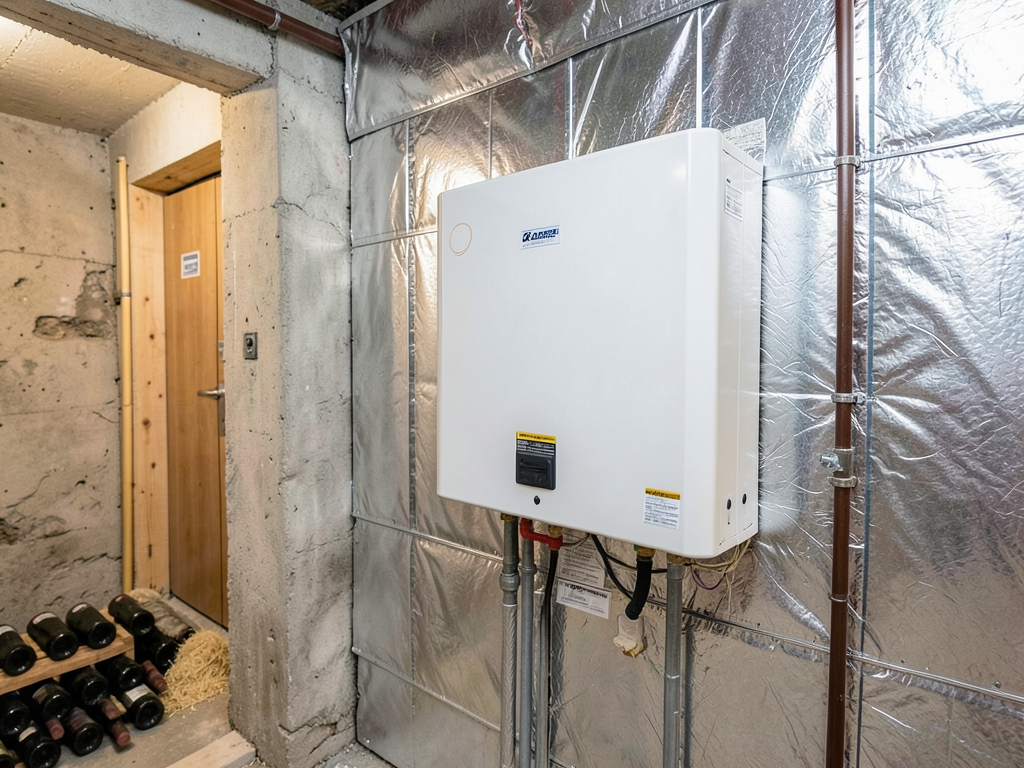
The Best Ways to Maintain the Perfect Temperature in Your Mequon Wine Cellar
Maintaining the perfect temperature in your Mequon wine cellar requires understanding both the science of wine preservation and the unique challenges of Wisconsin’s climate. The ideal storage conditions for wine sit between 55-58°F with 50-70% relative humidity. Standard home air conditioning systems cannot maintain these precise conditions and will cause your wine collection to age prematurely or develop off-flavors.
Mequon’s location along Lake Michigan creates specific challenges for wine storage. The lake-effect humidity combined with extreme seasonal temperature swings means your cellar needs specialized equipment that can handle both high moisture loads and rapid temperature fluctuations. A properly designed wine cellar cooling system acts as a miniature climate control zone, completely separate from your home’s HVAC system. EPA Humidity Control Guidelines.
The foundation of any successful wine cellar starts with proper insulation and vapor barrier installation. Milwaukee County building codes require specific R-values for basement insulation, typically R-19 to R-30 depending on wall construction. Without adequate insulation, your cooling system will run constantly, wasting energy and failing to maintain stable temperatures. Insulation R-Value Recommendations.
Understanding Wine Cellar Cooling System Types
Three main cooling system types serve Mequon wine cellars: self-contained through-the-wall units, split systems, and ducted climate control systems. Each offers different advantages depending on your cellar size, construction, and budget.
Self-contained units work well for cellars under 500 cubic feet. These through-the-wall systems mount directly into an exterior wall and require no ductwork. The evaporator sits inside the cellar while the condenser exhausts heat outside. These units typically cost between $1,800 and $3,500 installed and work best when your cellar has direct exterior wall access.
Split systems separate the evaporator and condenser units, allowing greater flexibility in installation. The evaporator mounts inside your cellar while the condenser sits remotely, often in an adjacent mechanical room or garage. This configuration reduces noise inside the cellar and allows for larger cooling capacities up to 2,000 cubic feet. Split systems range from $3,500 to $7,000 installed.
Ducted systems provide the most professional solution for large collections or custom installations. These units can cool multiple rooms through ductwork and offer precise temperature and humidity control. For Mequon’s climate, ducted systems often include integrated humidifiers and dehumidifiers to handle the lake-effect moisture swings. Expect to invest $8,000 to $15,000 for a complete ducted system with proper humidity management. Who to Call for Honest and Professional Furnace Repair in West Allis.
Critical Installation Requirements for Milwaukee Climate
Mequon’s climate creates specific installation challenges that generic cooling systems cannot handle. The freeze-thaw cycles common in southeastern Wisconsin can cause condensation issues if vapor barriers are improperly installed. Wisconsin Uniform Dwelling Code Section Comm 22.12 requires continuous vapor barriers on the warm side of insulation in below-grade applications.
High humidity levels from Lake Michigan mean your cooling system must remove significant moisture while maintaining stable temperatures. Most standard units cannot handle the 70-80% humidity levels common during Mequon summers. Professional wine cellar systems include oversized condensate pumps and drain pans to prevent overflow during peak humidity periods.
The clay soil prevalent in Ozaukee County affects basement construction and cooling system placement. Clay soil retains moisture and can create hydrostatic pressure against foundation walls. This requires additional waterproofing measures and may influence where you can place cooling equipment. Many Mequon homes require French drain systems around cellar perimeters to manage groundwater.
Top Wine Cellar Cooling Brands for Mequon Homes
Several manufacturers design cooling systems specifically for wine cellar applications. These units differ significantly from standard air conditioners in their ability to maintain constant temperatures and handle humidity control.
Wine Guardian systems lead the premium market with models ranging from 1,500 to 6,000 BTU capacities. Their TTW Pro series handles Milwaukee’s humidity through oversized condensate management and precise temperature control within ±0.5°F. Wine Guardian units include vibration isolation mounts to prevent wine agitation, a critical factor for long-term aging.
WhisperKool offers self-contained and split system options with sound levels as low as 45 dB. Their SC Pro series includes Wisconsin-specific models with enhanced condensate pumps and freeze protection for our harsh winters. These units work well in Mequon’s historic homes where noise reduction matters. What to Do When Your Historic East Side Home’s Boiler Stops Working.
CellarPro manufactures commercial-grade systems that handle large collections up to 10,000 cubic feet. Their humidity management systems include integrated humidifiers that maintain 60-70% RH levels during dry winter months when Mequon’s indoor air becomes extremely dry from heating systems.
Installation Best Practices for Long-Term Performance
Proper installation determines whether your wine cellar cooling system will provide twenty years of trouble-free operation or constant problems. Professional installation includes several critical steps that DIY approaches often miss.
Vapor barrier installation requires special attention in Mequon’s climate. The barrier must extend completely behind insulation and seal all penetrations. Even small gaps allow moisture migration that creates condensation, mold growth, and cooling system inefficiency. Professional installers use continuous polyethylene sheets with sealed seams meeting ASTM E1745 standards.
Insulation selection impacts both energy efficiency and temperature stability. Closed-cell spray foam provides superior R-values per inch and creates its own vapor barrier. For Mequon basements, R-19 fiberglass batts work well when properly installed with a separate vapor barrier. The total system R-value should exceed local building code minimums by 30% for wine cellar applications.
Electrical requirements often surprise homeowners. Wine cellar cooling systems need dedicated 15-20 amp circuits with proper grounding. Many Mequon homes built before 1980 require electrical panel upgrades to handle the additional load. The National Electrical Code Article 424 covers fixed electric space heating equipment requirements that apply to many wine cellar installations.
Maintenance Schedule for Wisconsin Wine Cellars
Seasonal maintenance keeps your wine cellar cooling system running efficiently through Milwaukee’s extreme weather swings. A proper maintenance schedule prevents costly repairs and protects your wine investment. Fast AC Repair Services for Shorewood Residents Who Need Relief from the Humidity.
Spring maintenance prepares your system for summer humidity loads. Clean the evaporator coil removes dust and pollen that accumulate during winter. Check condensate drain lines for algae growth that can cause backups. Test humidity control settings as outdoor moisture levels rise. Outdoor Unit Not Spinning.
Summer brings the highest cooling loads and potential for system stress. Monitor temperature consistency throughout the cellar using multiple thermometers. Clean condenser coils remove grass clippings and debris that reduce efficiency. Check refrigerant levels, as slight leaks often develop during peak operating months.
Fall maintenance prepares for winter operation. Clean or replace air filters to ensure proper airflow. Check door seals for wear that allows cold air escape. Test backup battery systems if your cellar includes temperature alarms.
Winter maintenance addresses unique Wisconsin challenges. Ensure proper clearance around outdoor condenser units for snow removal. Check for ice dam formation that can damage roof-mounted equipment. Verify that freeze protection features activate correctly during extreme cold snaps.
Common Problems and Professional Solutions
Wine cellar cooling systems face specific failure patterns in Mequon’s climate. Understanding these common issues helps you identify problems early and avoid wine damage.
Temperature fluctuations often result from inadequate insulation or improper system sizing. A cooling unit too small for your space runs continuously without achieving setpoint temperatures. Professional load calculations based on cubic footage, insulation values, and local climate data prevent this issue.
Humidity control failures create the most wine damage in southeastern Wisconsin. During summer, high humidity causes label deterioration and mold growth. Winter brings the opposite problem as heated indoor air drops to 20-30% relative humidity, drying out corks and allowing oxidation. Integrated humidifier/dehumidifier systems solve both problems.
Vibration transmission from cooling units can disturb wine sediment and accelerate aging. Professional installation includes vibration isolation mounts and flexible refrigerant lines. The condenser location significantly impacts vibration levels, with remote mounting often necessary for quiet operation.
Condensate management becomes critical during Mequon’s humid summers. Standard drain pans overflow when handling 3-4 gallons of daily condensation. Professional systems include oversized pans, secondary drains, and condensate pumps that automatically activate when primary drains clog.
Energy Efficiency and Operating Costs
Wine cellar cooling systems consume significant electricity, especially in older Mequon homes with poor insulation. Understanding energy usage helps you budget operating costs and identify efficiency improvements.
Modern wine cellar units achieve 18-22 SEER ratings through variable-speed compressors and ECM fan motors. These high-efficiency systems cost more upfront but reduce operating costs by 30-40% compared to standard units. In Mequon’s climate, the energy savings often offset the higher initial investment within three to five years.
Proper insulation dramatically impacts energy consumption. A well-insulated cellar might use 500-800 kWh monthly, while poorly insulated spaces can exceed 2,000 kWh. The difference represents $60 to $240 in monthly electricity costs at current Wisconsin rates. Why Your Bay View Bungalow Might Benefit from a Ductless Mini Split System.
Smart thermostats optimize energy usage by learning your cellar’s thermal characteristics. These devices adjust cooling cycles based on outside temperature forecasts and can reduce energy consumption by 15-20% without affecting wine quality.
Integration with Home Automation Systems
Modern wine cellars often integrate with whole-home automation systems for remote monitoring and control. These integrations provide peace of mind and early problem detection.
Wi-Fi enabled thermostats allow temperature and humidity monitoring through smartphone apps. Many systems send alerts when conditions deviate from preset ranges, allowing you to address problems before wine damage occurs. Integration with smart home platforms like Control4 or Crestron enables unified control with your home’s other systems.
Temperature and humidity data logging helps identify patterns and potential problems. Professional monitoring systems store weeks of data, making it easy to spot developing issues like gradual temperature drift or increasing humidity swings.
Backup power systems protect against outages that can ruin wine collections. Battery backup units provide 8-12 hours of operation during blackouts, while whole-home generators ensure continuous protection. For Mequon residents, where lake-effect storms can cause extended outages, backup power often justifies the investment.
Choosing the Right System for Your Collection Size
System sizing depends on your wine collection size, cellar construction, and local climate conditions. Professional load calculations ensure proper sizing and prevent costly mistakes.
For collections under 100 bottles in a small closet or pantry, self-contained units under 1,500 BTU suffice. These compact systems work well for beginners or those with limited space. Installation typically takes one day and costs $1,500 to $2,500.
Medium collections of 100-500 bottles require 1,500-3,000 BTU systems. Split systems often work best here, providing adequate capacity without excessive noise. Installation takes two to three days and costs $3,500 to $5,500.
Large collections over 500 bottles need commercial-grade systems of 3,000 BTU or more. Ducted systems provide the best temperature uniformity for large spaces. Installation requires one to two weeks and costs $8,000 to $15,000.
Future expansion planning prevents premature system replacement. Installing slightly oversized equipment costs 10-15% more upfront but accommodates collection growth without replacement. This approach proves economical for collectors who plan to expand their holdings.
Local Building Code Considerations
Mequon and surrounding Ozaukee County enforce specific building codes for wine cellar installations. Understanding these requirements prevents costly compliance issues.
Mechanical permits are required for all wine cellar cooling system installations. The City of Mequon building department reviews plans for proper ventilation, electrical safety, and structural modifications. Permit fees typically range from $150 to $400 depending on project scope.
Electrical code requirements include dedicated circuits, proper grounding, and GFCI protection in certain applications. The National Electrical Code Article 424 covers fixed electric space heating equipment that applies to many wine cellar installations. Professional electricians ensure compliance with all local amendments.
Ventilation requirements prevent moisture buildup and ensure proper equipment operation. Most codes require passive or active ventilation for cooling system condensers, especially for through-the-wall installations. Failure to provide adequate ventilation can result in system failure and code violations.
Sound transmission requirements may apply in Mequon’s residential zones. Some installations require sound attenuation measures to prevent noise disturbance to neighbors. Professional installers understand these requirements and can recommend appropriate solutions.
Frequently Asked Questions
How much does a wine cellar cooling system cost in Mequon?
Wine cellar cooling systems in Mequon range from $1,500 for small self-contained units to $15,000 for large ducted systems. Most homeowners spend $3,000 to $7,000 for professional installation including insulation and electrical work. The final cost depends on cellar size, system type, and installation complexity.
Can I use a regular air conditioner for my wine cellar?
Standard air conditioners cannot maintain the precise temperature and humidity levels required for wine storage. They typically produce 72-75°F temperatures and remove too much humidity, drying out corks. Wine cellar cooling systems maintain 55-58°F with 50-70% humidity, essential for proper wine aging.
How long do wine cellar cooling systems last?
Quality wine cellar cooling systems typically last 10-15 years with proper maintenance. Professional installation and annual maintenance can extend system life to 20 years. Components like compressors may need replacement after 8-10 years, while fan motors and controls often last the system’s full lifespan.
Do I need a permit for wine cellar installation in Mequon?
Yes, mechanical permits are required for all wine cellar cooling system installations in Mequon. The permit process ensures proper ventilation, electrical safety, and compliance with local building codes. Professional installers typically handle permitting as part of their service.
What temperature should my wine cellar be?
The ideal wine cellar temperature is 55-58°F for most wines. Red wines age best at the warmer end of this range while white wines prefer cooler temperatures. Consistent temperature matters more than the exact degree. Avoid temperature swings greater than 3-4°F to prevent wine damage.
Getting Started with Your Mequon Wine Cellar Project
Professional assessment determines your specific cooling requirements and identifies potential installation challenges. A thorough evaluation considers your collection size, space constraints, and local climate factors unique to Mequon.
Load calculations based on cubic footage, insulation values, and desired temperature ranges ensure proper system sizing. Professional installers use Manual J calculations adapted for wine cellar applications to determine exact cooling requirements.
Installation typically requires two to three days for standard systems and up to two weeks for complex projects. Professional installers coordinate electrical work, insulation upgrades, and system mounting to minimize disruption to your home.
Post-installation testing verifies proper operation across all temperature and humidity ranges. Professional installers check system performance during both summer heat and winter cold to ensure year-round reliability.
Maintenance agreements provide ongoing protection for your investment. Annual professional maintenance prevents costly repairs and ensures optimal wine storage conditions throughout Mequon’s seasonal extremes.
Ready to protect your wine collection with professional cooling solutions? Call (414) 387-8977 today to schedule your free consultation. Our Mequon wine cellar specialists understand the unique challenges of Wisconsin’s climate and can design the perfect system for your collection and budget.
Don’t let improper storage conditions ruin your valuable wine collection. Pick up the phone and call (414) 387-8977 before the next temperature swing damages your investment. Our team provides fast, professional service throughout the Mequon area with satisfaction guaranteed.
{
“@context”: “https://schema.org”,
“@type”: “BlogPosting”,
“headline”: “The Best Ways to Maintain the Perfect Temperature in Your Mequon Wine Cellar”,
“description”: “Expert guide to wine cellar cooling in Mequon. Learn humidity control, vapor barriers, and Milwaukee climate solutions from certified HVAC specialists.”,
“wordCount”: 2498,
“datePublished”: “2026-06-04T07:47:00.000Z”,
“dateModified”: “2026-06-04T07:47:00.000Z”,
“inLanguage”: “en-US”,
“mainEntityOfPage”: {
“@type”: “WebPage”,
“@id”: “https://firstchoicehvacmilwaukee.com”
},
“publisher”: {
“@type”: “LocalBusiness”,
“name”: “First Choice HVAC Milwaukee”,
“url”: “https://firstchoicehvacmilwaukee.com”
},
“author”: {
“@type”: “Organization”,
“name”: “First Choice HVAC Milwaukee”,
“url”: “https://firstchoicehvacmilwaukee.com”
},
“image”: {
“@type”: “ImageObject”,
“url”: “https://firstchoicehvacmilwaukee.com/wp-content/uploads/2026/03/the-best-ways-to-maintain-the-perfect-temperature-1.png”
}
}
{
“@context”: “https://schema.org”,
“@type”: “HVACBusiness”,
“name”: “First Choice HVAC Milwaukee”,
“url”: “https://firstchoicehvacmilwaukee.com”,
“address”: {
“@type”: “PostalAddress”,
“addressLocality”: “Milwaukee”
},
“areaServed”: {
“@type”: “City”,
“name”: “Milwaukee”
}
}
{
“@context”: “https://schema.org”,
“@type”: “FAQPage”,
“mainEntity”: [
{
“@type”: “Question”,
“name”: “How much does a wine cellar cooling system cost in Mequon?”,
“acceptedAnswer”: {
“@type”: “Answer”,
“text”: “Wine cellar cooling systems in Mequon range from $1,500 for small self-contained units to $15,000 for large ducted systems. Most homeowners spend $3,000 to $7,000 for professional installation including insulation and electrical work. The final cost depends on cellar size, system type, and installation complexity.”
}
},
{
“@type”: “Question”,
“name”: “Can I use a regular air conditioner for my wine cellar?”,
“acceptedAnswer”: {
“@type”: “Answer”,
“text”: “Standard air conditioners cannot maintain the precise temperature and humidity levels required for wine storage. They typically produce 72-75°F temperatures and remove too much humidity, drying out corks. Wine cellar cooling systems maintain 55-58°F with 50-70% humidity, essential for proper wine aging.”
}
},
{
“@type”: “Question”,
“name”: “How long do wine cellar cooling systems last?”,
“acceptedAnswer”: {
“@type”: “Answer”,
“text”: “Quality wine cellar cooling systems typically last 10-15 years with proper maintenance. Professional installation and annual maintenance can extend system life to 20 years. Components like compressors may need replacement after 8-10 years, while fan motors and controls often last the system’s full lifespan.”
}
},
{
“@type”: “Question”,
“name”: “Do I need a permit for wine cellar installation in Mequon?”,
“acceptedAnswer”: {
“@type”: “Answer”,
“text”: “Yes, mechanical permits are required for all wine cellar cooling system installations in Mequon. The permit process ensures proper ventilation, electrical safety, and compliance with local building codes. Professional installers typically handle permitting as part of their service.”
}
},
{
“@type”: “Question”,
“name”: “What temperature should my wine cellar be?”,
“acceptedAnswer”: {
“@type”: “Answer”,
“text”: “The ideal wine cellar temperature is 55-58°F for most wines. Red wines age best at the warmer end of this range while white wines prefer cooler temperatures. Consistent temperature matters more than the exact degree. Avoid temperature swings greater than 3-4°F to prevent wine damage.”
}
}
]
}
{
“@context”: “https://schema.org”,
“@type”: “BreadcrumbList”,
“itemListElement”: [
{
“@type”: “ListItem”,
“position”: 1,
“name”: “Home”,
“item”: “https://firstchoicehvacmilwaukee.com”
},
{
“@type”: “ListItem”,
“position”: 2,
“name”: “Blog”,
“item”: “https://firstchoicehvacmilwaukee.com/blog”
},
{
“@type”: “ListItem”,
“position”: 3,
“name”: “The Best Ways to Maintain the Perfect Temperature in Your Mequon Wine Cellar”
}
]
}
{
“@context”: “https://schema.org”,
“@type”: “Service”,
“serviceType”: “HVAC”,
“provider”: {
“@type”: “LocalBusiness”,
“name”: “First Choice HVAC Milwaukee”,
“url”: “https://firstchoicehvacmilwaukee.com”
},
“areaServed”: {
“@type”: “City”,
“name”: “Milwaukee”
},
“description”: “Expert guide to wine cellar cooling in Mequon. Learn humidity control, vapor barriers, and Milwaukee climate solutions from certified HVAC specialists.”
}