
That Weird Vinegar Smell Coming From Your Jackson Park AC Vents
If your air conditioner is suddenly pumping out a sharp, vinegary odor through your Jackson Park home’s vents, you’re not imagining things. That distinctive smell is a warning sign your HVAC system is trying to send you. In Milwaukee’s humid climate, especially in older neighborhoods like Jackson Park, this issue is surprisingly common and often points to mold, bacteria, or chemical reactions happening inside your system.
The good news? You can take immediate steps to protect your family’s air quality while we help you figure out the exact cause. Let’s break down what that smell means, why it’s happening in your Jackson Park home, and what you can do right now to fix it.
What Causes That Vinegar Smell in Your AC?
That sharp, acidic odor coming from your vents isn’t just unpleasant—it’s your HVAC system’s way of telling you something’s wrong. The smell typically comes from one of several sources:
- Microbial growth on evaporator coils or in drain pans
- Clogged condensate drain lines creating stagnant water
- Acetic acid produced by bacteria breaking down organic matter
- Electrical issues causing ozone production that mixes with moisture
In Jackson Park, where many homes were built between the 1920s and 1960s, older ductwork and aging systems create perfect conditions for these problems to develop.
Common Causes of Vinegar Odors in Air Conditioners
Clogged Condensate Drain Lines
Your AC naturally produces condensation as it cools air. This water collects in a drain pan and flows out through a condensate line. When that line gets clogged with algae, dirt, or mineral buildup, water backs up and creates a breeding ground for bacteria that produce that vinegary smell.
Jackson Park homes often have drain lines that haven’t been serviced in years, especially in properties that have changed hands multiple times. The combination of Milwaukee’s hard water and seasonal humidity creates ideal conditions for blockages.
Mold and Bacteria Growth on Evaporator Coils
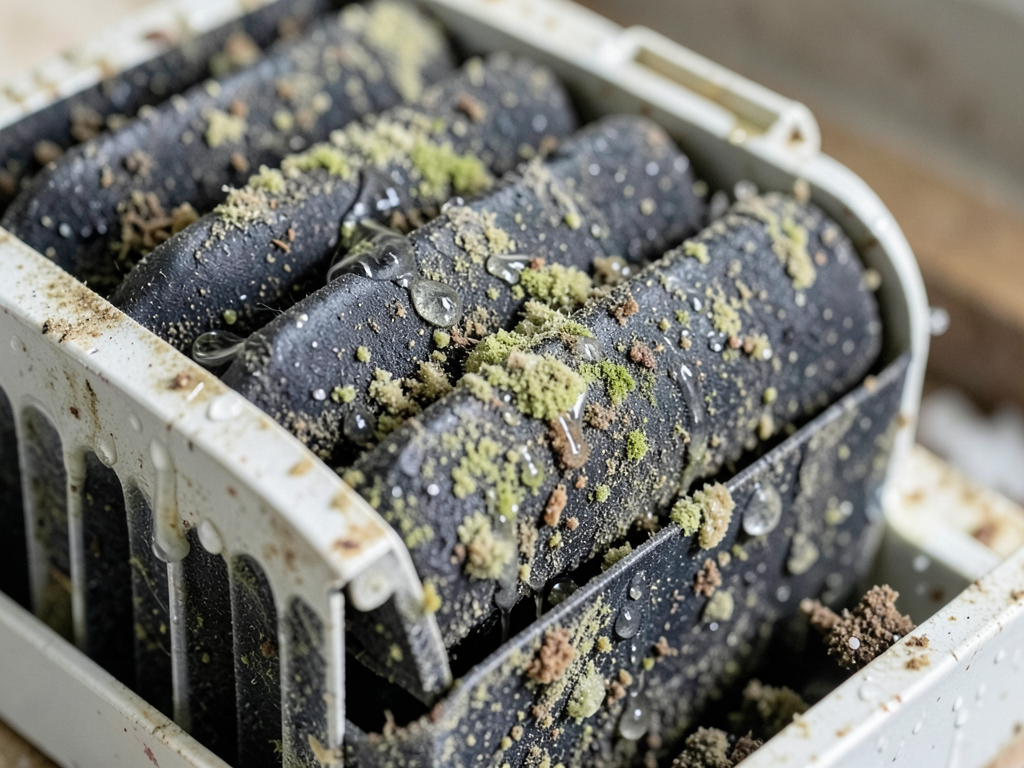
Your evaporator coils are constantly wet during cooling season. When dust and organic particles settle on these cold surfaces, they provide food for mold and bacteria. As these microorganisms grow, they release various compounds, including acetic acid, which smells exactly like vinegar. Cooling Tower Services.
Older Jackson Park homes with original ductwork often have coils that haven’t been cleaned in a decade or more. The tight spacing between fins in these older units makes them especially prone to trapping debris.
Dirty Air Filters and Milwaukee Humidity
A clogged air filter doesn’t just reduce airflow—it becomes a perfect breeding ground for bacteria. When warm, humid air from outside passes through a dirty filter, organic matter trapped in the filter breaks down and produces various odors, including that distinctive vinegar smell.
Milwaukee’s summer humidity, which often exceeds 70%, accelerates this process. In Jackson Park, where many homes have original or outdated filters, this is a common culprit.
Electrical Issues and Ozone Production
Sometimes that vinegar smell isn’t biological at all. Failing blower motors, damaged capacitors, or arcing electrical connections can produce ozone. When this ozone mixes with the moisture in your system, it creates a sharp, vinegar-like odor.
This is particularly dangerous because it indicates electrical problems that could lead to system failure or even fire. The smell might come and go as the failing component heats up and cools down. Why Your Bay View Bungalow Might Benefit from a Ductless Mini Split System.
Is a Vinegar Smell Dangerous? (Addressing VOCs and Mold)
While the vinegar smell itself isn’t typically toxic, it signals conditions that can be harmful to your health. Mold spores, bacteria, and volatile organic compounds (VOCs) can circulate through your home’s air, potentially causing:
- Respiratory irritation – coughing, sneezing, throat discomfort
- Allergic reactions – especially in children and elderly residents
- Asthma triggers – can worsen existing conditions
- Headaches and fatigue – from poor indoor air quality
The Wisconsin Department of Health Services recommends addressing any unusual HVAC odors within 24-48 hours, especially in homes with young children, elderly residents, or anyone with respiratory conditions. EPA Mold Information.
How Milwaukee’s Lake Effect and Humidity Impact Your HVAC System
Jackson Park’s location, just a few miles from Lake Michigan, means your HVAC system faces unique challenges. The lake effect creates higher humidity levels than areas even a few miles inland, often keeping outdoor dew points above 65°F during summer months. Outdoor Unit Not Spinning.
This constant moisture load means your AC runs longer cycles, creating more condensation. The older homes in Jackson Park, with their original ductwork and less efficient insulation, compound the problem by allowing more humid air infiltration.
Additionally, Milwaukee’s rapid weather changes—going from 90°F and humid to 70°F in a single day—cause your system to cycle frequently. These short cycles don’t allow proper moisture removal, leaving evaporator coils damp and promoting bacterial growth.
DIY Troubleshooting vs. When to Call a Milwaukee HVAC Specialist
Immediate Steps You Can Take
Before calling a professional, try these quick checks to identify the source: Who to Call for Honest and Professional Furnace Repair in West Allis.
- Check and Replace Your Air Filter
Remove the filter and hold it up to a light. If you can’t see light through it, replace it with a new MERV 8-11 filter. This takes 5 minutes and costs under $20.
- Inspect the Condensate Drain Line
Locate the PVC pipe near your indoor unit. If you see standing water or visible algae growth, that’s likely your culprit. You can try flushing it with a mixture of 1 cup vinegar and 1 gallon warm water.
- Check for Visible Mold
Look at accessible vents and registers. Black, green, or brown spots indicate mold growth that requires professional cleaning.
- Test with the System Off
Turn off your AC for 30 minutes. If the smell disappears, it’s likely biological growth. If it persists, you might have an electrical issue.. Read more about Signs Your Air Ducts Might Be Harboring Mold After a Humid Summer.
When to Call a Professional
Call a licensed HVAC technician immediately if:
- The smell persists after changing the filter and cleaning the drain line
- You notice reduced airflow or warm air from vents
- The odor is accompanied by unusual noises (clicking, buzzing, or humming)
- You see water pooling around your indoor unit
- Anyone in your home experiences respiratory symptoms
Professional coil cleaning in Milwaukee typically costs between $150-300, depending on system accessibility and the extent of buildup. This investment prevents more costly repairs down the road. Fast AC Repair Services for Shorewood Residents Who Need Relief from the Humidity.
Professional Solutions for Jackson Park Homes
Milwaukee HVAC professionals use several methods to eliminate vinegar odors permanently:
- UV light installation – Kills mold and bacteria on coils
- Coil cleaning with antimicrobial solutions – Removes buildup and prevents regrowth
- Drain line treatment – Prevents algae and bacterial growth
- Duct cleaning – Removes accumulated debris from older systems
For Jackson Park’s older homes, technicians often recommend a comprehensive system evaluation, as multiple issues frequently occur simultaneously in aging HVAC equipment.
Preventing Future Odor Problems
Once you’ve eliminated the current odor, prevent it from returning with these maintenance steps:
- Schedule bi-annual maintenance – Spring and fall checkups catch problems early
- Change filters monthly during cooling season – Milwaukee’s humidity means filters clog faster
- Install a whole-home dehumidifier – Reduces moisture load on your AC
- Consider system replacement – If your unit is over 15 years old, efficiency and reliability improve dramatically with new equipment
Milwaukee’s building code (Wisconsin Uniform Dwelling Code Section 23) requires proper condensate drainage for all HVAC installations. If your system was installed before 2010, it may not meet current standards. Wisconsin Department of Health Indoor Air Quality.
Schedule an Odor Diagnostic in Milwaukee, WI
That vinegar smell isn’t just annoying—it’s a sign your HVAC system needs professional attention. In Jackson Park’s humid climate, these issues tend to worsen quickly, potentially leading to more expensive repairs or health concerns.
Our Milwaukee-based technicians understand the unique challenges of older homes in neighborhoods like Jackson Park, Bay View, and Cudahy. We’ll diagnose the exact cause of your odor problem and provide transparent solutions tailored to your home’s specific needs.
Call (414) 387-8977 today to schedule your inspection. We offer same-day service for urgent odor issues and provide upfront pricing with no hidden fees. Don’t let that smell get worse—your family deserves clean, fresh air.
Remember, ignoring HVAC odors often leads to bigger problems. That vinegar smell is your system’s way of asking for help. Let our experienced Milwaukee team restore your home’s air quality and your peace of mind.
Frequently Asked Questions
Why does my AC smell like vinegar only when it first turns on?
This usually indicates bacterial growth on the evaporator coil that’s been dormant during the off cycle. When the system starts, moisture activates the bacteria, releasing the odor. A professional coil cleaning typically resolves this issue.
Can I use bleach to clean my condensate drain line?
While bleach can kill algae, it’s harsh on your system and can create harmful fumes. A mixture of white vinegar and warm water is safer and equally effective for most drain line clogs. For persistent blockages, call a professional.
How often should I have my Jackson Park home’s AC serviced?
Milwaukee’s climate demands twice-yearly maintenance—once in spring before cooling season and again in fall. Older Jackson Park homes with original ductwork may need more frequent service due to dust accumulation and humidity challenges.
Is that vinegar smell covered by my home warranty?
Most home warranties cover mechanical failures but not maintenance issues like mold growth or dirty coils. However, if the odor stems from a failed component (like a blower motor), it might be covered. Check your specific warranty terms.
You may also find this helpful. What to Do When Your Big Bend Neighbors Complain About Your Loud AC Unit.
{
“@context”: “https://schema.org”,
“@type”: “BlogPosting”,
“headline”: “That Weird Vinegar Smell Coming From Your Jackson Park AC Vents”,
“description”: “That vinegar smell from your AC vents? It’s likely mold or bacteria. Learn why Jackson Park homes face this issue and when to call a Milwaukee HVAC pro.”,
“wordCount”: 1608,
“datePublished”: “2026-03-26T12:02:00.000Z”,
“dateModified”: “2026-03-26T12:02:00.000Z”,
“inLanguage”: “en-US”,
“mainEntityOfPage”: {
“@type”: “WebPage”,
“@id”: “https://firstchoicehvacmilwaukee.com”
},
“publisher”: {
“@type”: “LocalBusiness”,
“name”: “First Choice HVAC Milwaukee”,
“url”: “https://firstchoicehvacmilwaukee.com”
},
“author”: {
“@type”: “Organization”,
“name”: “First Choice HVAC Milwaukee”,
“url”: “https://firstchoicehvacmilwaukee.com”
},
“image”: {
“@type”: “ImageObject”,
“url”: “https://firstchoicehvacmilwaukee.com/wp-content/uploads/2026/03/that-weird-vinegar-smell-coming-from-your-jackson-1.png”
}
}
{
“@context”: “https://schema.org”,
“@type”: “HVACBusiness”,
“name”: “First Choice HVAC Milwaukee”,
“url”: “https://firstchoicehvacmilwaukee.com”,
“address”: {
“@type”: “PostalAddress”,
“addressLocality”: “Milwaukee”
},
“areaServed”: {
“@type”: “City”,
“name”: “Milwaukee”
}
}
{
“@context”: “https://schema.org”,
“@type”: “FAQPage”,
“mainEntity”: [
{
“@type”: “Question”,
“name”: “What Causes That Vinegar Smell in Your AC?”,
“acceptedAnswer”: {
“@type”: “Answer”,
“text”: “That sharp, acidic odor coming from your vents isn’t just unpleasant—it’s your HVAC system’s way of telling you something’s wrong. The smell typically comes from one of several sources:”
}
},
{
“@type”: “Question”,
“name”: “Why does my AC smell like vinegar only when it first turns on?”,
“acceptedAnswer”: {
“@type”: “Answer”,
“text”: “This usually indicates bacterial growth on the evaporator coil that’s been dormant during the off cycle. When the system starts, moisture activates the bacteria, releasing the odor. A professional coil cleaning typically resolves this issue.”
}
},
{
“@type”: “Question”,
“name”: “Can I use bleach to clean my condensate drain line?”,
“acceptedAnswer”: {
“@type”: “Answer”,
“text”: “While bleach can kill algae, it’s harsh on your system and can create harmful fumes. A mixture of white vinegar and warm water is safer and equally effective for most drain line clogs. For persistent blockages, call a professional.”
}
},
{
“@type”: “Question”,
“name”: “How often should I have my Jackson Park home’s AC serviced?”,
“acceptedAnswer”: {
“@type”: “Answer”,
“text”: “Milwaukee’s climate demands twice-yearly maintenance—once in spring before cooling season and again in fall. Older Jackson Park homes with original ductwork may need more frequent service due to dust accumulation and humidity challenges.”
}
},
{
“@type”: “Question”,
“name”: “Is that vinegar smell covered by my home warranty?”,
“acceptedAnswer”: {
“@type”: “Answer”,
“text”: “Most home warranties cover mechanical failures but not maintenance issues like mold growth or dirty coils. However, if the odor stems from a failed component (like a blower motor), it might be covered. Check your specific warranty terms.”
}
}
]
}
{
“@context”: “https://schema.org”,
“@type”: “HowTo”,
“name”: “HVAC Odor Troubleshooting”,
“step”: [
{
“@type”: “HowToStep”,
“position”: 1,
“name”: “Check and Replace Your Air Filter”,
“text”: “Remove the filter and hold it up to a light. If you can’t see light through it, replace it with a new MERV 8-11 filter. This takes 5 minutes and costs under $20.”
},
{
“@type”: “HowToStep”,
“position”: 2,
“name”: “Inspect the Condensate Drain Line”,
“text”: “Locate the PVC pipe near your indoor unit. If you see standing water or visible algae growth, that’s likely your culprit. You can try flushing it with a mixture of 1 cup vinegar and 1 gallon warm water.”
},
{
“@type”: “HowToStep”,
“position”: 3,
“name”: “Check for Visible Mold”,
“text”: “Look at accessible vents and registers. Black, green, or brown spots indicate mold growth that requires professional cleaning.”
},
{
“@type”: “HowToStep”,
“position”: 4,
“name”: “Test with the System Off”,
“text”: “Turn off your AC for 30 minutes. If the smell disappears, it’s likely biological growth. If it persists, you might have an electrical issue.”
}
],
“image”: “https://firstchoicehvacmilwaukee.com/wp-content/uploads/2026/03/that-weird-vinegar-smell-coming-from-your-jackson-1.png”
}
{
“@context”: “https://schema.org”,
“@type”: “BreadcrumbList”,
“itemListElement”: [
{
“@type”: “ListItem”,
“position”: 1,
“name”: “Home”,
“item”: “https://firstchoicehvacmilwaukee.com”
},
{
“@type”: “ListItem”,
“position”: 2,
“name”: “Blog”,
“item”: “https://firstchoicehvacmilwaukee.com/blog”
},
{
“@type”: “ListItem”,
“position”: 3,
“name”: “That Weird Vinegar Smell Coming From Your Jackson Park AC Vents”
}
]
}
{
“@context”: “https://schema.org”,
“@type”: “Service”,
“serviceType”: “HVAC”,
“provider”: {
“@type”: “LocalBusiness”,
“name”: “First Choice HVAC Milwaukee”,
“url”: “https://firstchoicehvacmilwaukee.com”
},
“areaServed”: {
“@type”: “City”,
“name”: “Milwaukee”
},
“description”: “That vinegar smell from your AC vents? It’s likely mold or bacteria. Learn why Jackson Park homes face this issue and when to call a Milwaukee HVAC pro.”
}