
Is Your Menomonee Falls Attic Insulation Making Your HVAC System Work Too Hard?
Wisconsin’s extreme seasonal swings from sub-zero polar vortexes to humid 90-degree summers create unique challenges for Menomonee Falls homeowners. When your attic insulation fails to keep up, your HVAC system works overtime trying to maintain comfort, leading to higher energy bills, uneven temperatures, and premature equipment failure. Wisconsin Uniform Dwelling Code.
The problem starts with Wisconsin’s climate zone 6 requirements. Homes in Menomonee Falls need attic insulation rated R-49 to R-60, yet many were built with R-30 or less. This insulation gap forces your furnace to run constantly during winter and your air conditioner to struggle through summer humidity. The result? Your HVAC system cycles more frequently, experiences more wear, and costs you more money every month. New HVAC System Cost 2026.
Understanding how attic insulation impacts your HVAC system is the first step toward solving comfort issues and reducing energy waste. Let’s examine what’s really happening in your attic and how it affects the equipment that keeps your family comfortable year-round.. Read more about Understanding SEER2 Ratings Before You Buy a New Air Conditioner in Muskego.
How Poor Attic Insulation Forces Your HVAC System to Work Overtime
Attic insulation acts as your home’s thermal barrier, preventing heat transfer between your living space and the unconditioned attic area. When this barrier fails, your HVAC system must compensate by running longer cycles to maintain the temperature you set on your thermostat.. Read more about Do You Really Need an Attic Fan for Your Butler Home This Summer?.
During Menomonee Falls winters, heat naturally rises through poorly insulated ceilings. Your furnace must burn more fuel to replace this lost heat, often running continuously on the coldest days. In summer, solar heat penetrates your roof and radiates into the attic, then seeps through the ceiling into your living space. Your air conditioner then works harder to remove this excess heat, struggling to keep up with the continuous heat gain.. Read more about Common Furnace Noises and What They Actually Mean for Your Greenfield Home.
This constant cycling creates several problems for your HVAC equipment. Motors experience more wear from frequent starts and stops. Compressors in air conditioners face increased stress from running longer cycles. Heat exchangers in furnaces endure more thermal stress from extended operation. Over time, these conditions lead to more frequent breakdowns and shorter equipment lifespan.
Beyond equipment wear, poor attic insulation creates comfort issues throughout your home. Rooms may feel drafty in winter or stuffy in summer. Temperature differences between floors become more pronounced. Humidity levels fluctuate, making your home feel less comfortable even when the temperature reads correctly on your thermostat.
Wisconsin Building Code Requirements for Attic Insulation
Wisconsin’s Uniform Dwelling Code (UDC) Chapter 23 establishes minimum insulation requirements for new construction and major renovations. For attic spaces in climate zone 6, which includes Menomonee Falls, the code requires R-49 minimum for ceilings and R-60 for optimal performance.
These requirements reflect Wisconsin’s severe winter conditions and high energy costs. The UDC also mandates proper air sealing before adding insulation, recognizing that air leaks can reduce insulation effectiveness by up to 50%. Common air leak sources include attic access hatches, plumbing penetrations, electrical fixtures, and the joint between exterior walls and attic floors.
Older homes in Menomonee Falls often fall far below these standards. Many homes built before 2000 have R-19 to R-30 insulation, while some from the 1970s or earlier may have as little as R-11. Even homes with adequate initial insulation can lose effectiveness over time as insulation settles, becomes compressed, or develops moisture damage.
Building code compliance extends beyond insulation R-values. The UDC requires proper ventilation to prevent moisture buildup and ice dam formation. It also mandates specific installation techniques to avoid thermal bridging, where heat transfers through structural elements like rafters and joists that create direct paths between conditioned and unconditioned spaces.
Common Attic Insulation Problems in Menomonee Falls Homes
Menomonee Falls’ climate creates specific challenges for attic insulation. The area’s heavy snowfall and freeze-thaw cycles can lead to ice dam formation when attic heat escapes through poorly insulated ceilings. These ice dams can damage roofs, gutters, and even create indoor water leaks that compromise insulation effectiveness.
High humidity during summer months can cause moisture problems in attics. When warm, moist air from your living space enters a cool attic, condensation forms on cold surfaces. This moisture can compress insulation, reducing its R-value and creating conditions for mold growth. The problem becomes worse when bathroom fans or dryer vents terminate in the attic rather than outside.
Many Menomonee Falls homes have attic access points that weren’t properly sealed during construction. Pull-down stairs, scuttle holes, and attic hatches often have minimal insulation and significant air leakage. A typical uninsulated attic hatch can lose as much heat as a small window left open year-round.
Older insulation materials present additional challenges. Vermiculite insulation, common in homes built before 1980, may contain asbestos and requires professional handling. Fiberglass batts can settle over time, creating gaps and reducing effectiveness. Cellulose insulation can absorb moisture and develop mold if ventilation problems exist. Who to Call for Honest and Professional Furnace Repair in West Allis.
Thermal bridging occurs when structural elements create direct heat transfer paths. In typical Menomonee Falls homes, rafters and ceiling joists extend from the heated space into the attic, allowing heat to bypass insulation. This problem is particularly noticeable around skylights, chimneys, and where walls meet attic spaces.. Read more about UV Lights or Media Filters (Which is Better for Air Quality in Fox Point?).
The HVAC-Insulation Connection: Why Both Systems Matter
Your HVAC system and home insulation work together as an integrated system. When insulation performs poorly, your HVAC equipment must work harder to compensate. This relationship means that upgrading insulation can sometimes allow you to install smaller, more efficient HVAC equipment when replacement time comes.
Heat pumps, which are becoming more popular in Wisconsin, are particularly sensitive to insulation quality. These systems move heat rather than generate it, making them highly efficient when properly sized for a well-insulated home. However, in poorly insulated homes, heat pumps may struggle to maintain comfort during extreme cold, forcing expensive backup electric resistance heating to activate.
Furnaces in poorly insulated homes often run at maximum capacity during cold snaps, never reaching their peak efficiency. Modern high-efficiency furnaces achieve their rated efficiency only when they can modulate their output based on actual heating demand. When demand is artificially high due to poor insulation, these sophisticated systems can’t operate as designed.
Air conditioning efficiency suffers similarly. An oversized air conditioner in a poorly insulated home may cool the space quickly but fail to adequately dehumidify. This short-cycling behavior reduces comfort, wastes energy, and increases wear on the compressor. Proper insulation allows for correctly sized equipment that runs longer, more efficient cycles.
The relationship extends to indoor air quality. Poor insulation often correlates with air leakage problems that allow dust, pollen, and outdoor pollutants to enter your home. Your HVAC system then must filter this additional load, potentially reducing filter life and indoor air quality. Outdoor Unit Not Spinning.
Energy Efficiency Upgrades Available to Menomonee Falls Residents
Wisconsin residents have access to several energy efficiency programs that can offset the cost of insulation upgrades. Focus on Energy, Wisconsin’s statewide energy efficiency and renewable resource program, offers rebates for insulation improvements that can cover 30-50% of project costs for eligible homeowners. Focus on Energy Wisconsin.
Focus on Energy rebates apply to both attic insulation and air sealing projects. The program requires a home energy assessment before and after improvements to verify results. This assessment, which costs $200-400, includes a blower door test to measure air leakage, infrared scanning to identify insulation gaps, and recommendations for specific improvements.
We Energies, which serves Menomonee Falls, offers additional incentives through their Energy Efficiency Program. These incentives can stack with Focus on Energy rebates, potentially covering even more of your project cost. The utility also provides low-interest financing options for larger energy efficiency projects through partnerships with local lenders.
Federal tax credits under the Inflation Reduction Act provide additional savings for energy efficiency improvements. Homeowners can claim 30% of qualified insulation costs, up to $1,200 annually. These credits apply to both materials and installation labor, making professional installation more affordable.
Local contractors often have relationships with utility programs and can help navigate the rebate process. Some offer free energy assessments as part of their proposal process, allowing you to understand your home’s specific needs before committing to improvements.
Professional Insulation Assessment: What to Expect
A professional insulation assessment goes beyond simply measuring existing insulation depth. Certified energy auditors use specialized equipment to identify problems that aren’t visible to the naked eye. The assessment typically includes a blower door test, which depressurizes your home to measure air leakage and identify specific leak locations.
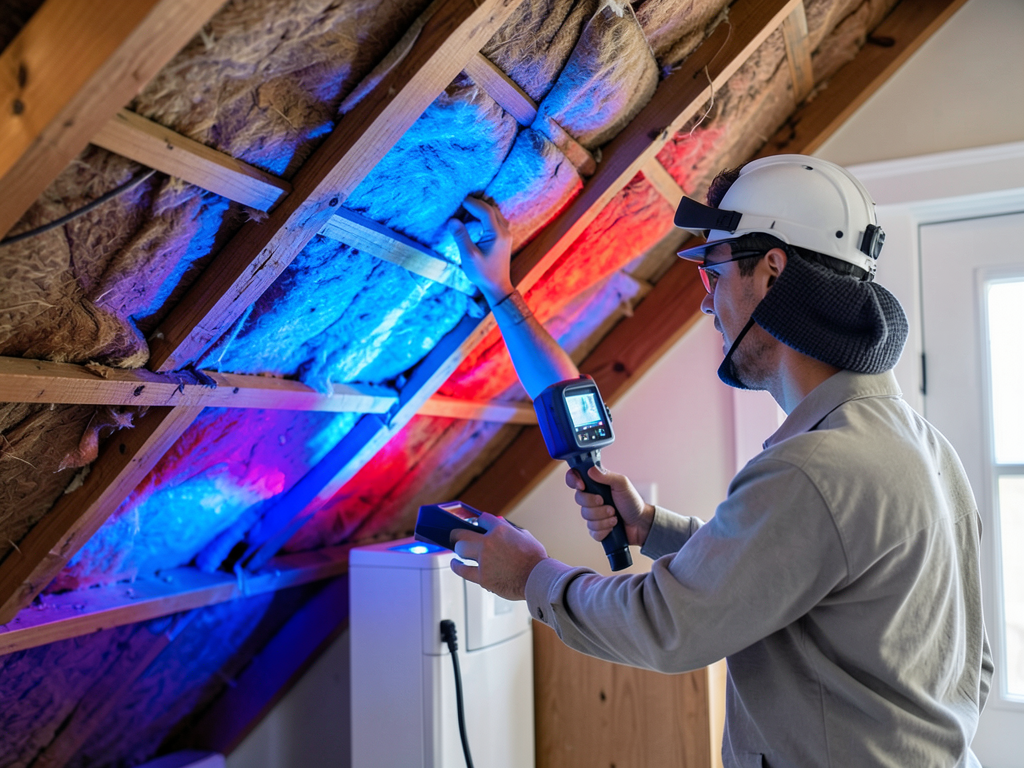
Infrared cameras reveal temperature differences that indicate insulation gaps, air leaks, and moisture problems. During winter assessments, cold spots appear as blue or purple areas on the infrared display. Summer assessments show heat gain patterns that help identify where insulation is inadequate or missing entirely.
The auditor examines your attic space for proper ventilation, checking that soffit vents aren’t blocked by insulation and that ridge or gable vents provide adequate exhaust. They also look for signs of moisture damage, pest infestation, and structural issues that could affect insulation performance.
Based on the assessment, you’ll receive a detailed report showing current insulation levels, air leakage measurements, and specific recommendations. The report typically includes projected energy savings from proposed improvements, payback period calculations, and information about available rebates and incentives.
Professional assessments also consider your HVAC system’s condition and efficiency. The auditor may recommend specific furnace or air conditioner improvements that would complement your insulation upgrades, creating a comprehensive home performance plan.
Choosing the Right Insulation for Your Menomonee Falls Home
Several insulation types work well for Wisconsin attics, each with specific advantages. Fiberglass batts offer low cost and easy installation but can settle over time and may not provide complete coverage in irregular spaces. Blown-in fiberglass provides better coverage and can achieve higher R-values per inch than batts.
Blown-in cellulose, made from recycled paper products, offers excellent thermal performance and sound deadening. It fills irregular spaces well and provides some moisture resistance. However, it can absorb moisture if ventilation problems exist and may settle more than fiberglass over time.
Open-cell spray foam provides superior air sealing along with insulation value. It expands to fill gaps and creates an effective moisture barrier. While more expensive than other options, spray foam can eliminate the need for separate air sealing work and provides structural benefits in some applications.
Closed-cell spray foam offers the highest R-value per inch and provides a complete moisture barrier. It’s ideal for areas prone to moisture problems but costs significantly more than other options. Some building codes limit closed-cell foam use in certain applications due to its vapor barrier properties.
The best choice depends on your specific situation, including existing insulation, attic configuration, budget, and whether you’re addressing specific problems like ice dams or moisture issues. A professional assessment can help determine which option provides the best value for your home.
DIY Insulation Checks: When to Call a Professional
Homeowners can perform basic insulation checks to identify potential problems. Start by measuring insulation depth in several attic locations using a ruler or tape measure. Compare your measurements to recommended R-values for your climate zone. Remember that insulation effectiveness depends on both depth and continuity.
Look for visible gaps, compressed areas, or places where insulation has been disturbed. Check around attic access points, plumbing stacks, and electrical fixtures for signs of air leakage. These areas often have minimal insulation and represent significant energy loss points.
Inspect your attic during daylight hours with the lights off. Look for daylight coming through roof penetrations or gaps in the ceiling plane. These openings indicate air leakage paths that reduce insulation effectiveness and allow conditioned air to escape.
Check for moisture problems by looking for water stains, mold growth, or compressed insulation. Pay special attention to areas near bathroom vents, kitchen exhaust ducts, and where roof planes meet walls. These locations are prone to condensation problems.
While DIY checks can identify obvious problems, they cannot detect hidden issues like inadequate ventilation, thermal bridging, or the full extent of air leakage. Professional assessment becomes necessary when you notice comfort problems, high energy bills, or when planning major renovations that affect your home’s thermal envelope.
Case Study: Energy Efficiency Improvement in a Menomonee Falls Colonial
A 1980s colonial home in the Lilly Creek area of Menomonee Falls experienced chronic comfort issues despite having a relatively new HVAC system. The homeowners reported cold drafts in winter, hot second-floor bedrooms in summer, and energy bills averaging $350 monthly during peak seasons.
A professional energy assessment revealed R-19 fiberglass batts in the attic, numerous air leaks around recessed lights and plumbing penetrations, and inadequate ventilation. The assessment also identified thermal bridging around the chimney chase and skylight shafts.
The improvement project involved removing existing insulation, air sealing all penetrations with spray foam, adding blown-in cellulose to achieve R-60, and installing an insulated attic hatch cover. The homeowners also sealed and insulated the duct system where it passed through unconditioned spaces.
Post-improvement testing showed a 35% reduction in air leakage and consistent R-60 insulation levels throughout the attic. The homeowners reported immediate comfort improvements, with second-floor temperatures becoming consistent with first-floor levels. Energy bills dropped by an average of 28%, saving approximately $1,200 annually.. Read more about How to Fix Uneven Temperatures in Your Glendale Home with HVAC Zoning.
The project qualified for $2,800 in Focus on Energy rebates and $600 in federal tax credits, reducing the net cost to $3,200. The simple payback period was calculated at 2.7 years, after which the homeowners continued saving money while enjoying improved comfort.
Frequently Asked Questions
How much insulation do I need in my Menomonee Falls attic?
For optimal performance in Wisconsin’s climate zone 6, your attic should have R-49 to R-60 insulation. This typically translates to 16-20 inches of blown-in fiberglass or cellulose, or the equivalent in spray foam. Older homes often have only R-19 to R-30, which is inadequate for our climate.
Will adding insulation make my HVAC system last longer?
Yes. When your home holds temperature better due to proper insulation, your HVAC system runs fewer cycles and experiences less wear. This can extend equipment life by 3-5 years while reducing maintenance needs and improving reliability during extreme weather events.
How do I know if my attic has enough ventilation?
Proper attic ventilation requires balanced intake and exhaust. Look for continuous soffit vents along the eaves and ridge vents or gable vents near the peak. A quick check is to feel for air movement at gable vents on a windy day. Professional assessment using infrared scanning provides definitive results.
Can I add new insulation over old insulation?
In most cases yes, but only if the existing insulation is dry and in good condition. Never cover wet or moldy insulation. Also, avoid blocking soffit vents with new insulation, as this can trap moisture and create serious problems. Professional assessment ensures proper installation techniques.
How long does professional insulation installation take?
Most attic insulation projects in Menomonee Falls homes take 1-2 days for a typical 1,500-2,500 square foot attic. Factors affecting duration include existing insulation removal needs, air sealing complexity, and the type of insulation being installed. Weather rarely affects indoor installation work.
Take Action: Improve Your Home’s Efficiency Today
Don’t let inadequate attic insulation force your HVAC system to work harder than necessary. The combination of Wisconsin’s harsh climate and many older homes in Menomonee Falls creates the perfect conditions for energy waste and comfort problems. Understanding the connection between your attic insulation and HVAC performance is the first step toward solving these issues.
Professional energy assessment can identify specific problems in your home and recommend targeted solutions. With available rebates and tax credits, many homeowners find that insulation improvements pay for themselves through energy savings within just a few years. Beyond the financial benefits, you’ll enjoy more consistent temperatures, better humidity control, and reduced HVAC maintenance needs.
Ready to stop your HVAC system from working overtime? Call (414) 387-8977 today to schedule your comprehensive home energy assessment. Our certified technicians will evaluate your attic insulation, identify air leaks, and recommend solutions tailored to your Menomonee Falls home. Don’t wait until the next extreme weather event to discover your home’s efficiency problems.
Pick up the phone and call (414) 387-8977 before the next cold snap or heat wave hits. Your HVAC system will thank you with improved performance, lower energy bills, and longer service life. Serving Menomonee Falls homeowners with expert insulation and HVAC solutions since 2010.
Don’t let poor attic insulation cost you money and comfort. Contact us today at (414) 387-8977 to learn how we can help your HVAC system work smarter, not harder. Your path to lower energy bills and improved comfort starts with a simple phone call.
Remember: Proper attic insulation isn’t just about saving money—it’s about creating a more comfortable, efficient home that protects your HVAC investment for years to come. Call (414) 387-8977 now to schedule your assessment and take the first step toward a more efficient home.
You may also find this helpful. The Best Ways to Heat Your Garage or Workshop in New Berlin.
You may also find this helpful. Essential Steps to Prepare Your AC for the First Heat Wave in Pewaukee.
You may also find this helpful. Cool Your Historic Brewer’s Hill Home Without Ruining the Architecture.
{
“@context”: “https://schema.org”,
“@type”: “BlogPosting”,
“headline”: “Is Your Menomonee Falls Attic Insulation Making Your HVAC System Work Too Hard?”,
“description”: “Discover how poor attic insulation in Menomonee Falls forces your HVAC system to overwork. Learn about local climate challenges, R-value requirements, and energy-saving solutions.”,
“wordCount”: 2816,
“datePublished”: “2026-03-05T11:53:00.000Z”,
“dateModified”: “2026-03-05T11:53:00.000Z”,
“inLanguage”: “en-US”,
“mainEntityOfPage”: {
“@type”: “WebPage”,
“@id”: “https://firstchoicehvacmilwaukee.com”
},
“publisher”: {
“@type”: “LocalBusiness”,
“name”: “First Choice HVAC Milwaukee”,
“url”: “https://firstchoicehvacmilwaukee.com”
},
“author”: {
“@type”: “Organization”,
“name”: “First Choice HVAC Milwaukee”,
“url”: “https://firstchoicehvacmilwaukee.com”
},
“image”: {
“@type”: “ImageObject”,
“url”: “https://firstchoicehvacmilwaukee.com/wp-content/uploads/2026/03/is-your-menomonee-falls-attic-insulation-making-yo-1.png”
}
}
{
“@context”: “https://schema.org”,
“@type”: “HVACBusiness”,
“name”: “First Choice HVAC Milwaukee”,
“url”: “https://firstchoicehvacmilwaukee.com”,
“address”: {
“@type”: “PostalAddress”,
“addressLocality”: “Milwaukee”
},
“areaServed”: {
“@type”: “City”,
“name”: “Milwaukee”
}
}
{
“@context”: “https://schema.org”,
“@type”: “FAQPage”,
“mainEntity”: [
{
“@type”: “Question”,
“name”: “How much insulation do I need in my Menomonee Falls attic?”,
“acceptedAnswer”: {
“@type”: “Answer”,
“text”: “For optimal performance in Wisconsin’s climate zone 6, your attic should have R-49 to R-60 insulation. This typically translates to 16-20 inches of blown-in fiberglass or cellulose, or the equivalent in spray foam. Older homes often have only R-19 to R-30, which is inadequate for our climate.”
}
},
{
“@type”: “Question”,
“name”: “Will adding insulation make my HVAC system last longer?”,
“acceptedAnswer”: {
“@type”: “Answer”,
“text”: “Yes. When your home holds temperature better due to proper insulation, your HVAC system runs fewer cycles and experiences less wear. This can extend equipment life by 3-5 years while reducing maintenance needs and improving reliability during extreme weather events.”
}
},
{
“@type”: “Question”,
“name”: “Can I add new insulation over old insulation?”,
“acceptedAnswer”: {
“@type”: “Answer”,
“text”: “In most cases yes, but only if the existing insulation is dry and in good condition. Never cover wet or moldy insulation. Also, avoid blocking soffit vents with new insulation, as this can trap moisture and create serious problems. Professional assessment ensures proper installation techniques.”
}
},
{
“@type”: “Question”,
“name”: “How long does professional insulation installation take?”,
“acceptedAnswer”: {
“@type”: “Answer”,
“text”: “Most attic insulation projects in Menomonee Falls homes take 1-2 days for a typical 1,500-2,500 square foot attic. Factors affecting duration include existing insulation removal needs, air sealing complexity, and the type of insulation being installed. Weather rarely affects indoor installation work.”
}
}
]
}
{
“@context”: “https://schema.org”,
“@type”: “BreadcrumbList”,
“itemListElement”: [
{
“@type”: “ListItem”,
“position”: 1,
“name”: “Home”,
“item”: “https://firstchoicehvacmilwaukee.com”
},
{
“@type”: “ListItem”,
“position”: 2,
“name”: “Blog”,
“item”: “https://firstchoicehvacmilwaukee.com/blog”
},
{
“@type”: “ListItem”,
“position”: 3,
“name”: “Is Your Menomonee Falls Attic Insulation Making Your HVAC System Work Too Hard?”
}
]
}
{
“@context”: “https://schema.org”,
“@type”: “Service”,
“serviceType”: “HVAC”,
“provider”: {
“@type”: “LocalBusiness”,
“name”: “First Choice HVAC Milwaukee”,
“url”: “https://firstchoicehvacmilwaukee.com”
},
“areaServed”: {
“@type”: “City”,
“name”: “Milwaukee”
},
“description”: “Discover how poor attic insulation in Menomonee Falls forces your HVAC system to overwork. Learn about local climate challenges, R-value requirements, and energy-saving solutions.”
}